Monday, October 30, 2006

Armchair travel to Arabian Sands

Arabian Sands by Wilfred Thesiger is widely recognized as a classic of travel literature. Thesiger, born in 1910, spent the late 1940s traveling in the "Empty Quarter" of Arabia with Bedu tribesmen. (He objects to the more common name Bedouin for grammatical reasons.) He spoke Arabic, wore native clothing, rode a camel for days and days across wide stretches of desert, suffered hunger and thirst, hid from authorities who hated infidels, hunted Oryx and other desert animals, and generally enjoyed every minute of his escape from civilization.

"All my life I had hated machines," he wrote. "I did not go to the Arabian desert to collect plants nor to make a map; such things were incidental. ... I went there to find peace in the hardship of desert travel and the company of desert peoples." He committed himself to travel the hard way, without any modern conveniences or conveyances: "Perhaps this was one reason why I resented modern inventions; they made the road too easy." (p. 278)

I enjoyed the details the author presents about the Bedu's powers of observation that allowed them to cross empty desert and find the rare watering places for the camels while avoiding hostile tribes. He describes the uncomfortable posture that one assumes to ride a camel, the way that the meager food is prepared, the occasional rain that created discomfort but which they had no way to capture for drink, the varieties of discomfort from cold, sand, wind, scorpion stings, and more. He told how his companions' view that any guest must be given food repeatedly made him fear as his scanty supplies of flour and coffee were offered to strangers. The variety of each chapter is always a surprise.

I suspect that I am wise to know nothing else about Thesiger than the facts presented in this book. I suspect that an Englishman who loved Arabs so much would be on the opposite side of many political situations from me. Evidence: a map of the Middle East (p. 40) where every country is named except Israel, whose boundaries are recognizable but whose existence is unrecognized. I can make a guess what this means. Thesiger stayed away from global politics. He mentioned the Israel independence war only once, in a rather neutral way, stating that his Bedu had never heard of the Jews at all. So I prefer to seek no further than this supposed neutrality.

The author's overall impression in the final pages of the book: "I shall always remember how often I was humbled by those illiterate hersmen who possessed, in so much grater measure than I, genrosity and courage, endurance, patience, and lighthearted gallantry." (p. 329)

In other words, we have the work of a romantic Orientalist of a type that can no longer sustain reasonable people's credulity. The development of the clash of civilizations, Christian and Islamic, reflected already in the widespread hatred of infidels Thesiger encountered, has changed ones ability to buy this approach. As he wrote, oil drilling and exploration were already certain to change everything for his Bedu companions. It's interesting to see the last gasp of this romantic voyaging.


Arabian Sands: Revised Edition

Thursday, October 26, 2006

Another Hike with International Neighbors

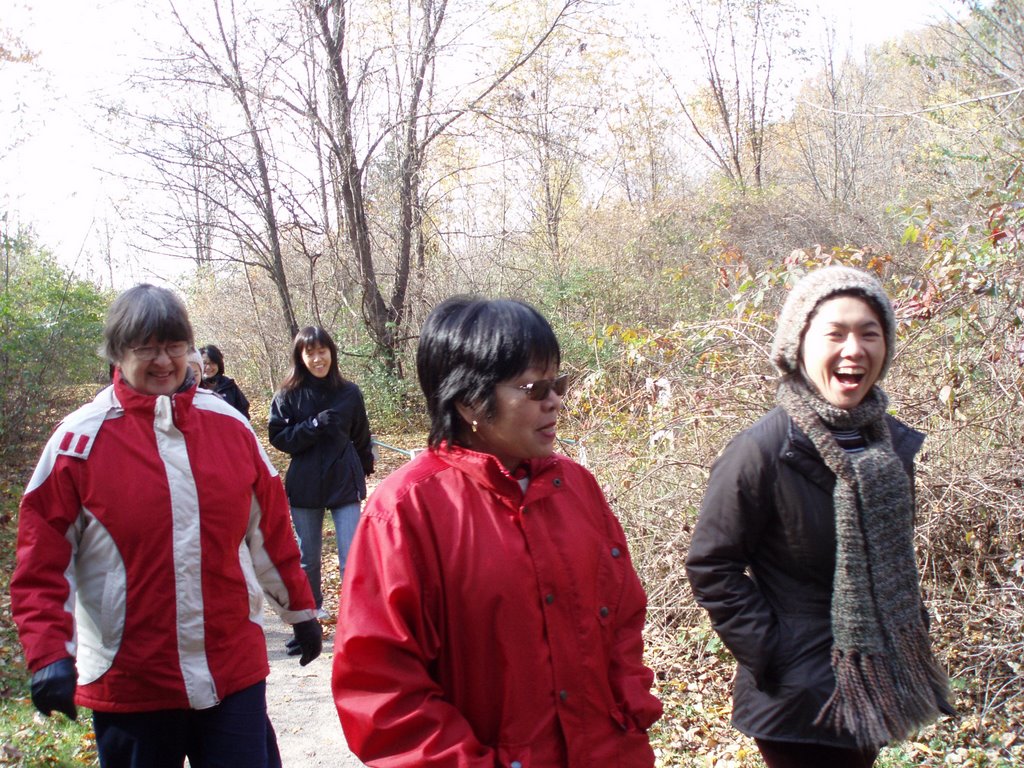
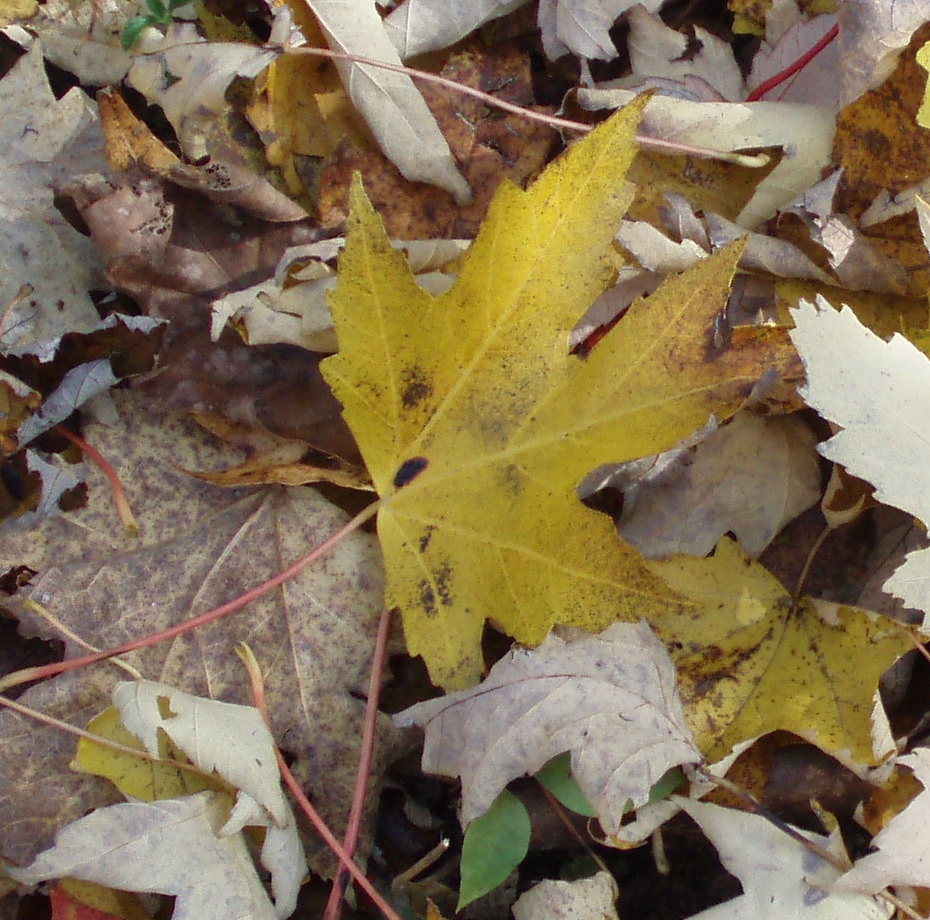
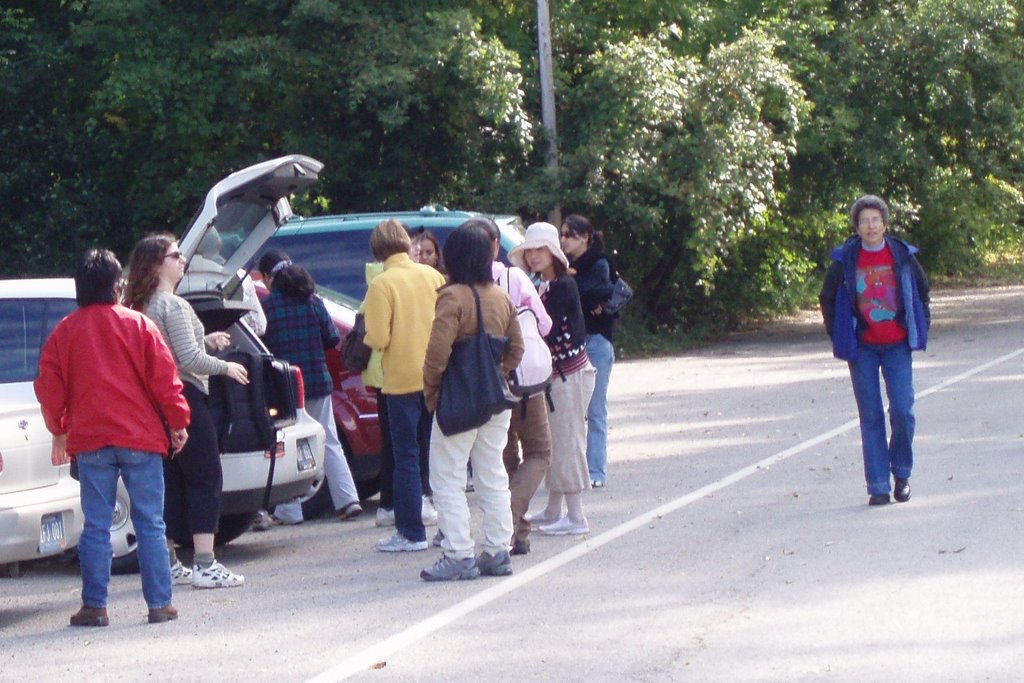
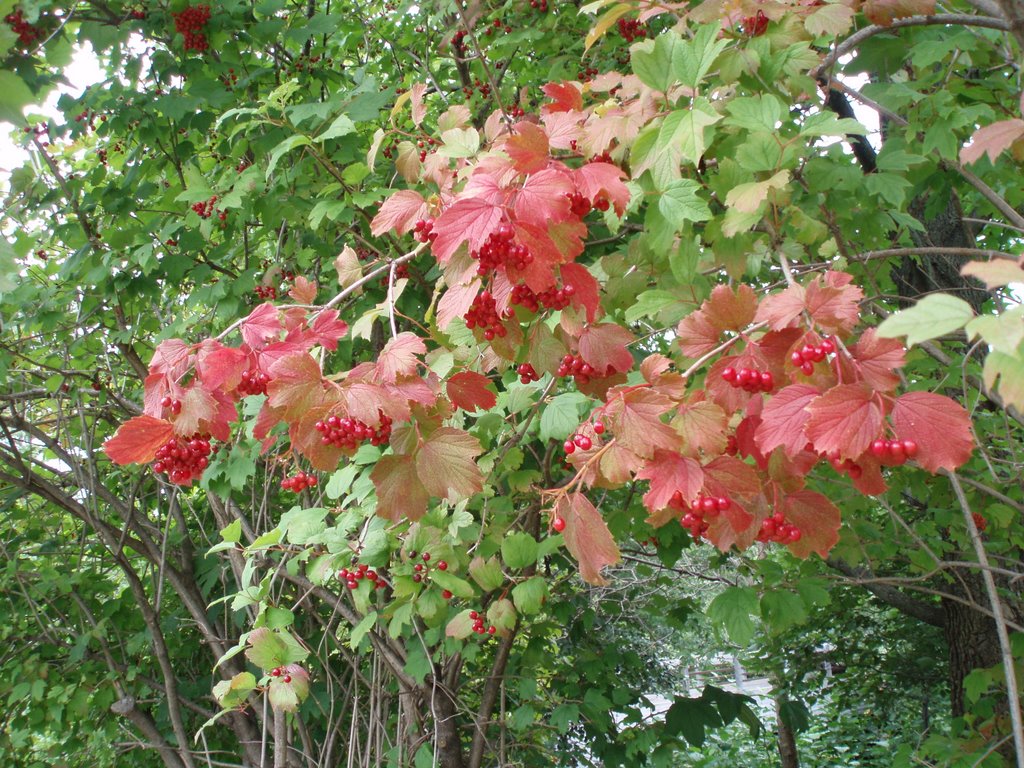
This week we hiked at County Farm Park, near the recreation building where I do my exercise class. About a dozen women participated. The weather and the fall leaves were very beautiful.

I talked to several of the other hikers, and I learned something really interesting from Katie. We were talking about making blogs, and she explained how one enters Japanese characters into a computer -- or a blog. She says one types the phonetic word into the computer (in the Hiragana alphabet). The computer returns the equivalent character (or a choice of possible equivalent character) in the pictorial system. The typist selects the desired character, thus creating a correct version of his or her text. I find this really fascinating.


Note and update: A friend asked about Japanese writing that I mentioned above. Here's a website with a description: Origin of writing in Japan

Thursday, October 12, 2006

Early Snow


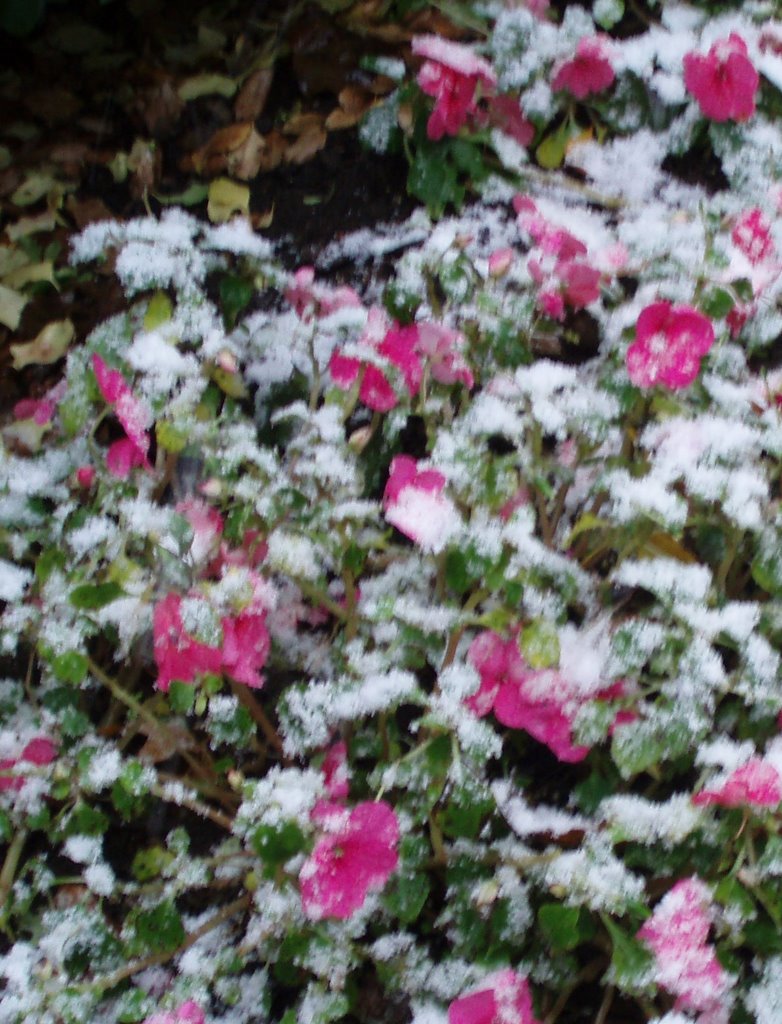
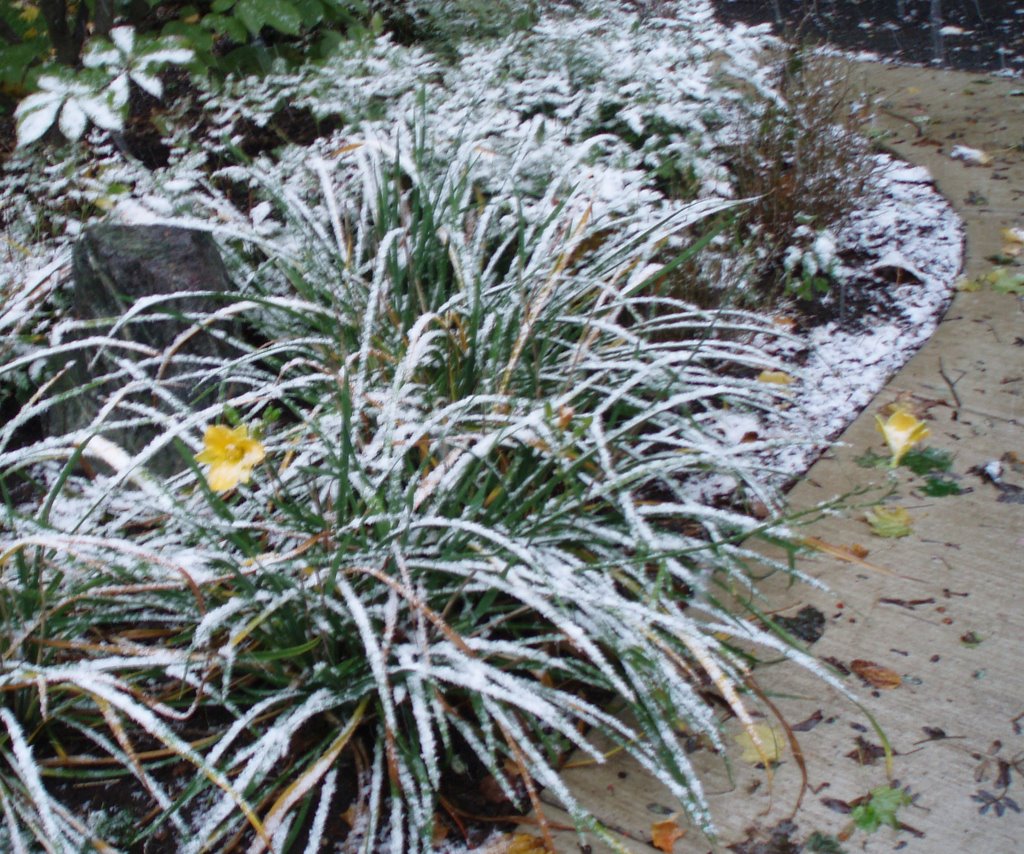
Update. As often happens, we came up lucky compared to Buffalo. The snow in the picture was essentially 100% of our snow. After that: rain and a few snow showers, but no accumulation. This morning's NYT (October 13) reported:
"BUFFALO, N.Y. (AP) -- A rare early October snowstorm left parts of western New York blanketed with 2 feet of snow Friday morning, prompting widespread blackouts, closing schools and halting traffic."

Monday, October 09, 2006

A Week in Fairfax


When I wasn't watching Miriam and Alice, I also spent an afternoon at the National Gallery of Art, especially enjoying the special exhibit “Henri Rousseau: Jungles in Paris." High point of the exhibit: a stuffed lion attacking an antelope, posed as seen by a taxidermist in Paris years before Rousseau studied jungle creatures in the Natural History museum at the Jardin des Plantes.
On the wall: the magnificent Rousseau painting of the same scene, with the two animals set in a huge jungle of greenhouse plants. For more on this see Henri Rousseau: Jungles in Paris - The Hungry Lion...

Images from the press (like L'Illustration and Le Petit Journal), postcards, and other source material for Rousseau's eccentric visions also accompanied an amazing assembly of paintings from museums throughout the world as well as in private collections.

Food in Fairfax


Thursday, September 28, 2006

A Walk in Webster Township

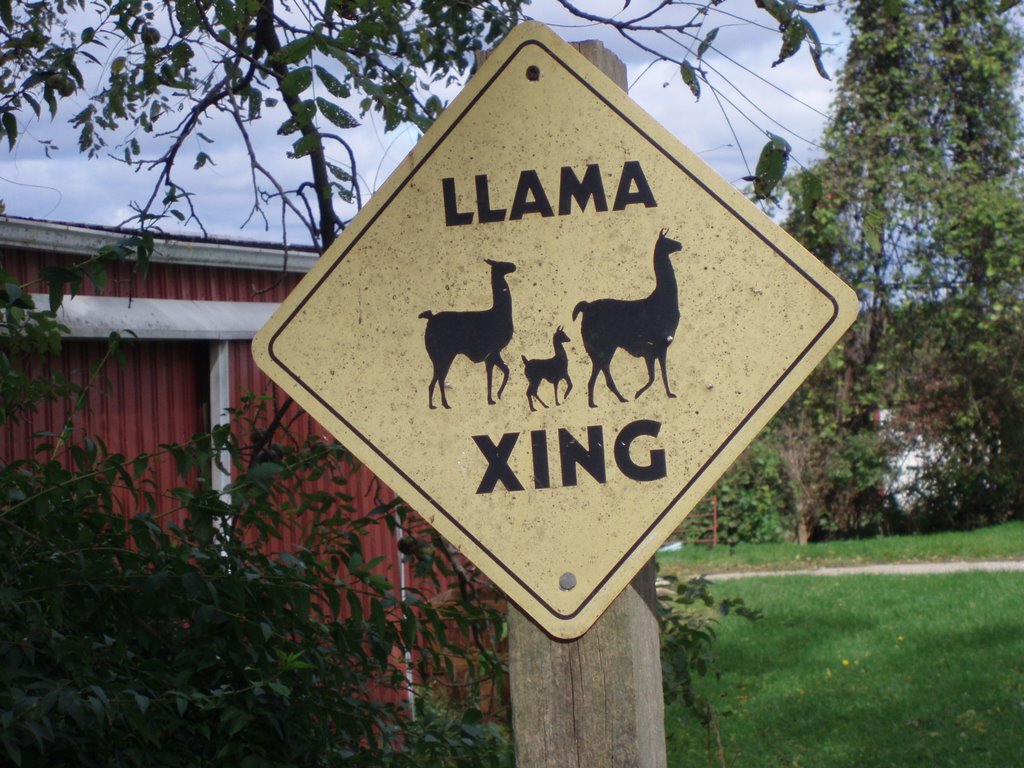
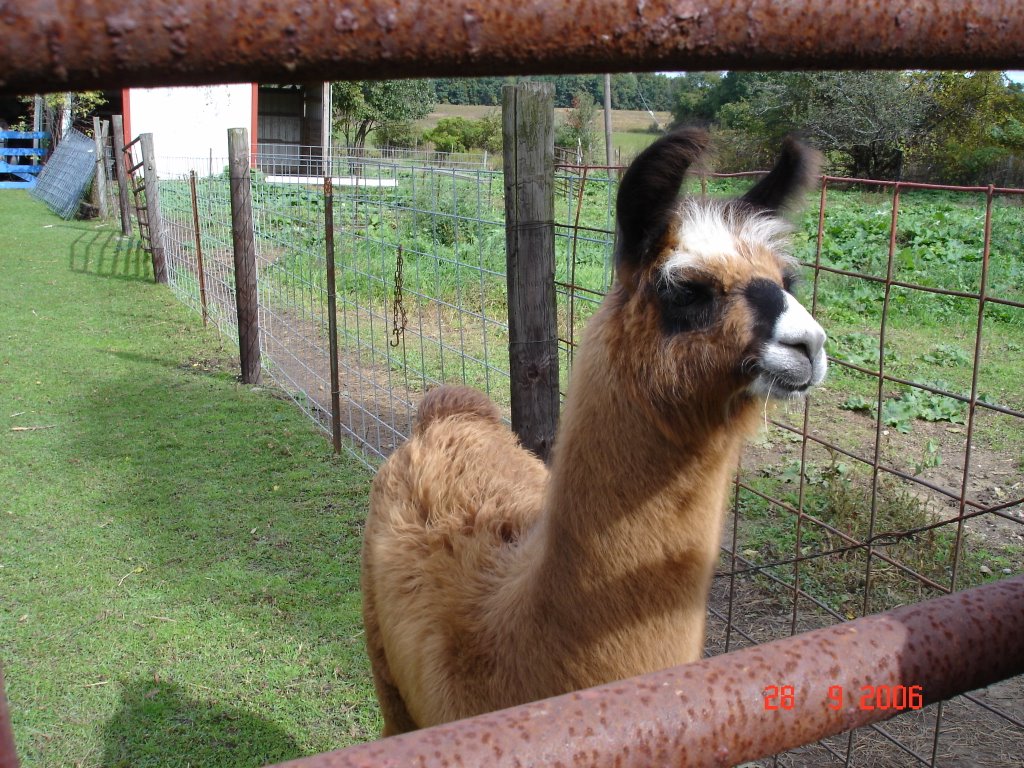
Today was my first hike with the International Neighbors Hiking Group. We started at the church on Webster Church Road, walked to Zeeb Road, up to a llama farm, and back to the church. On the way, we saw huge puff balls, and passed by a farm whose inhabitants love to draw murals on the sides of their buildings.


After the walk, the church's gardner -- a friend of the hike leader -- invited us to eat our sack lunches in the garden. From the picnic tables we enjoyed the view of her colorful flowers and vegetables. Her sweet potato plants spread down from their raised bed: the church has a relationship with people from Ghana, who love to cook and eat sweet potato leaves as well as the tubers. Unfortunately the weather has turned very cool, so it was not entirely comfortable to eat outdoors.


The boy scouts have a meeting place nearby. The gardner discovered that the scouts are happy to supply her with labor for building the garden. They have cleared some ground and made wooden raised beds that are thus accessible to visitors in wheel chairs and walkers.

The gardener said that few of the usual visitors are coming now that it's fall, so she offered herbs and flowers to take home. She gave me some marvelously scented basil. Several young women were also delighted with the flowers she gave them.

Here's one more picture by another member of the group:

Friday, September 22, 2006

Thursday, September 21, 2006

Kitchen and Bath Redo

New countertops, tile backsplashes, kitchen sink, stove, dishwasher, and bathroom faucets are virtually complete after almost two weeks of work and no cooking. The new dishwasher is running right this minute, as I have saved up the few dishes we have used during the down time (thoroughly rinsed, I assure you). It's very quiet. I know how to load it because it's just like Evelyn and Tom's dishwasher.

The new smooth-top stove, countertops, and tile backsplash:
The old stove (which wasn't working right) with old countertops etc:The new sink with space age faucet -- the tile color is actually blue with glass tile accents:

The old sink:The new faucets and new tile backsplash in the downstairs bathroom:
The old bathroom setup:

Tuesday, September 19, 2006

Charles Lindbergh, Failed Hero

My bookclub recently discussed The Plot Against America by Philip Roth, which turns on imagined alternate history of the early 1940s. In the novel, instead of Roosevelt, Charles A.Lindbergh wins the presidential election of 1940. Like the author, the fictitious narrator of The Plot Against America is named Philip Roth, he was born in 1933, and he lived in Newark, New Jersey. The personal events of the book seem very much to mirror Roth's early life -- except, of course, those events that were caused by the book's fictitious revision of history. At the end of the book, the world snaps back into the historic flow of events: Roosevelt's presidency, America's role in World War II, and the Holocaust.

One subject of our discussion was the contrast between the future, when it was unknown, and our view of a known history that has happened already. Throughout the book, the narrator, "Philip," makes clear that his telling of the story occurs years later, probably as late as around 2000 when the non-fictitious author Roth wrote the book. This retrospective stand, of course, lines up with the reader's point of view. Explicitly and indirectly, we are made aware that the as events in the book take place, no one had to be aware of the fate of 6,000,000 Jews because, in fact, perhaps their extermination was not inevitable. By presenting an alternate reality that's worse than history, he also brings up the possiblity that there was a better possible future that also did not happen.

Evidently, the bookclub spent some time discussing the fictitious and the historical Charles Lindbergh. This is particularly interesting to me, because my mother was a senior in high school in May, 1927, when Lindbergh flew across the Atlantic and became a national hero. (Perhaps a hero like no other in our history.) And when his betrayal of America was also still an unknown possibility.


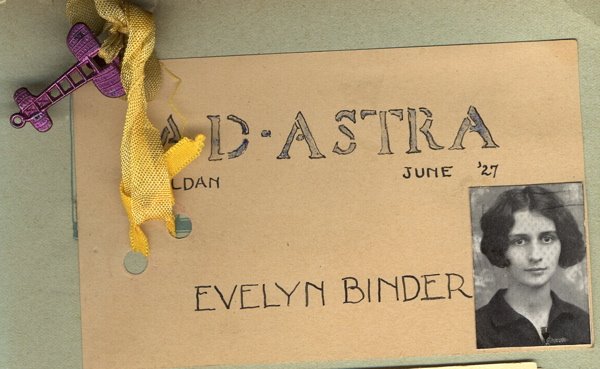
In going over my mother's high school scrapbook I found the above photo of Lindbergh in 1927: before he became a supporter and defender of Nazi Germany. It's pasted into her scrapbook opposite a name tag with a little model of his airplane and her photo. Her class motto, "Ad Astra: To the Stars," was quickly associated with Lindbergh's flight. What disappointments lay ahead of them!

My mother sometimes mentioned the excitement of hearing of Lindbergh's flight, and the hero worship of her classmates -- and also his later politics. So Roth's book especially speaks to me of the failure of that heroic Lindbergh who inspired my mother and her peers. Roth forces us to deal with this failure. When Lindbergh accepted Nazi honors, defended Hitler's policies, and tried to prevent us from entering the war in Europe, he failed America.

I have posted more pictures from my mother's album:
The Girl Graduate's Record Book

Friday, September 08, 2006

Puck of Pook's Hill

I just bought an old edition of this Kipling classic with a few illustrations by Arthur Rackham. The print quality is not high, but I like having a 100 year old copy of the book. I will read it soon. I last read it while in Cambridge, where it connected to my surroundings in an appealing way. I will add to this post as I rethink my reaction at that time.

Friday, September 01, 2006

Seasonal Changes

We've had a lot of rain this week, and just a few leaves are beginning to turn red. With the poet people say that April is the cruelest month, and somehow go all-over weepy because spring is so poignant.

Me? I think September is the cruelest. Intense summer beauty begins to turn dark and dismal. Leaves fall into ponds which then start to stagnate. I feel the threat of frost in the morning air. Before September ends we might have all the impatiens turning black, and no more fresh, local tomatoes and peaches. If we have a commitment to eating local, we will soon be back to apples, cabbages, carrots, and potatoes. I haven't been a schoolchild in years, but September still whispers: no freedom...

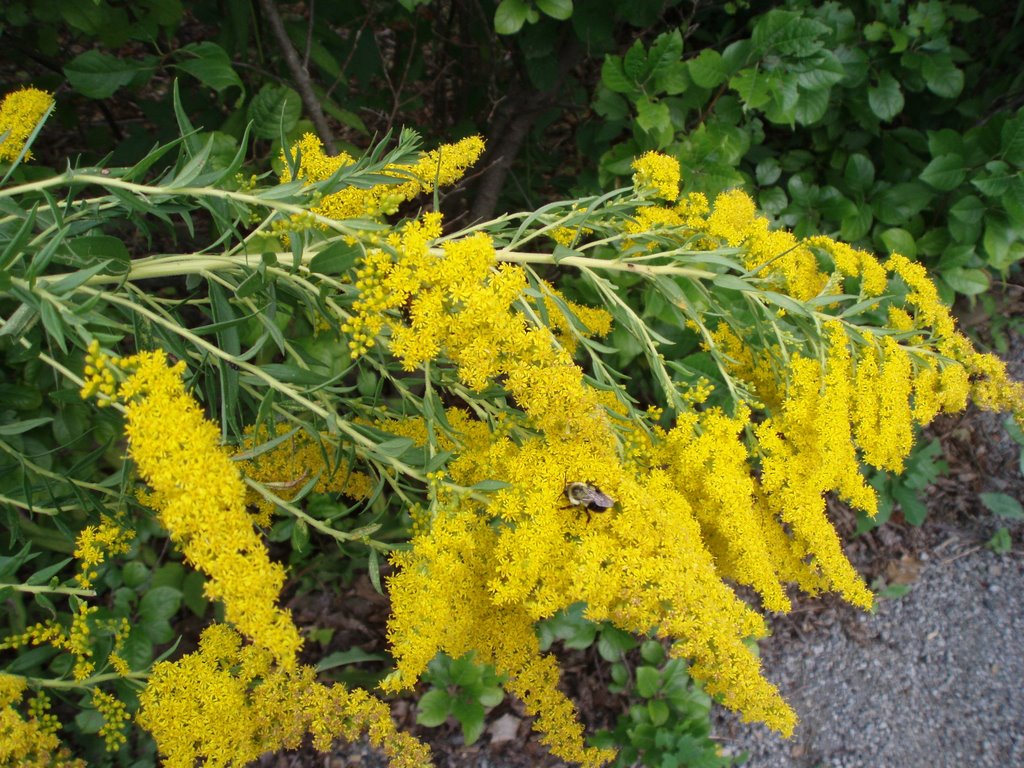
Also, it's allergy month. People say goldenrod isn't the culprit for most snifflers and sneezers. It blooms at the stuffiest moment of the year, as far as I'm concerned.

I wouldn't mind if the geese would fly away, though. I heard that there's negotiation to reduce the international protection of these flying pests. They stay here all year, dirtying up the grass in our nice park.

Thursday, August 31, 2006

Bob Dylan now and then

Old Bob Dylan has a new album. I can't think of him as aging like the rest of us. In 1989, I went to a Bob Dylan concert in Paris, and his voice didn't crack and tremble dramatically, as it once did. He drowned out his voice in extremely amplified instrumental music. I wonder what the new album will be like.


At newyorker.com this week there are reviews of various books on Dylan. I lifted the wonderful photo -- how young Dylan looked in 1963.

Above all, the online issue includes a wonderful reprint of Nat Hentoff’s Profile of Dylan from 1964, including a long description of a Dylan recording session. Hentoff wrote: "Dylan went on to record a song about a man leaving a girl because he was not prepared to be the kind of invincible hero and all-encompassing provider she wanted. 'It ain’t me you’re looking for, babe,' he sang, with finality."

What finality. It makes me remember the first song I heard by the electric Dylan, "Ballad of the thin man," the one with the refrain "You know something is happening, but you don't know what it is, do you, Mr.Jones."

Read the article:


The Crackin’, Shakin’, Breakin’ Sounds
by Nat Hentoff
Issue of 1964-10-24
Posted 2006-08-28

Tuesday, August 29, 2006

"Waiting for Lefty"

Did you say that Walmart pioneered the exploitation of unskilled workers? No? Good.

But if you ever give this idea a second thought, I recommend that you read the compelling play "Waiting for Lefty" by Clifford Odets. Lefty is the union leader who is going to organize the poor desperate taxi drivers. They earn almost nothing and they blame their employers, the owners of the taxis, who reduce their wages. Their wives and sweethearts are deserting them or kicking them out. The credit companies are repossessing their furniture. Their children are hungry. If they need medical care, only charity will give it to them. And Lefty never comes.

I have been meaning to read this play for a long time. It's powerful. It's completely relevant. And it was written in 1935. Are we really still waiting? If Lefty came today, what would he do?

Waiting for Lefty and Other Plays by Clifford Odets.

Friday, August 25, 2006

Antisemites, Moslems, Self-Hating Jews Assemble at Ann Arbor Jewish Community Center

There's plenty of room for discussion and dissent, but it seems simply antiJewish to stand on the sidewalk outside a Jewish Community Center with a bullhorn (maybe illegal) recycling slogans from the 1960s. The event inside was positive and in fact nobody really pays any attention to the people outside any more.


Addendum September 16, 2005:
An anonymous comment asked: " Why were they there? Not to protest the second Israeli invasion of Lebanon, by chance.......?"
Answer: In this instance, protest took place before a meeting at the Jewish Community Center concerning the war between Hizbollah and Israel. However, this group of 5 to 15 protestors have been picketing an Ann Arbor synagogue, a local business (owned by a Jewish businessman), and events at the Jewish Community Center for two years or more. They also have been disrupting meetings of the Ann Arbor City Council for at least several months. I referred to them in a post last May 11 ("Meanwhile, back at home..."). The protestors' tactics are anti-Jewish as well as anti-Zionist, as they hold all Jews responsible for all actions of the Israeli government. That is why they picket and disrupt the synagogue, whose members I am told have a variety of political beliefs. (I am not a member of the picketed synagogue).

From my email to my friend Erin

I feel very lucky today: I'm going to the Bris of a friend's first grandson. I assume that having been in Israel, you know that that's a ritual circumcision. Of course the Israelis spell and pronounce it Brit. They don't do it just to confuse and confound. It's historical. They picked the other diaspora pronunciations a hundred years ago. My husband says I don't have to look...at the crucial time. Being ex-Reform Jews instead of ex-someotherkindofJews, we have been to only one each of these ceremonies, though this one is a Reform event -- the Reform Jews are going backwards from when we were kids when it was done during the post natal hosp stay without relatives present (you can't possibly find this interesting! But you might be amused to know that one of Detroit's moyles is on everyone's do-not-go-there list because he was arrested for drunk driving: just who you would want to do youknowwhat.)

Anyway last night I went to a community event to support Israel, complete with picketers and bull horns calling us all war criminals recycling slogans from sixties antiVietnam protests. It was indoors so that was just in the parking lot. I am very gloomy about the future of Israel, as are many people, even the most optimistic. To boot, I'm reading Huntington's famous
The Clash of Civilizations and the Remaking of World Order
The Clash of Civilizations and the Remaking of World Order by Samuel P. Huntington

In some cases, it's amazing that he wrote around 10 years ago and was very prescient, especially about Islamic civillization and barbarism. The moslems hated it and then went out and did what he said, I guess.

Monday, August 21, 2006

Hat Photo


For a long time, I used this as the photo for my blogger profile. It shows Miriam, Alice, and me trying hats at the old-fashioned hat shop at Greenfield Village. We took it in the summer of 2006.

Fairy Land is Here

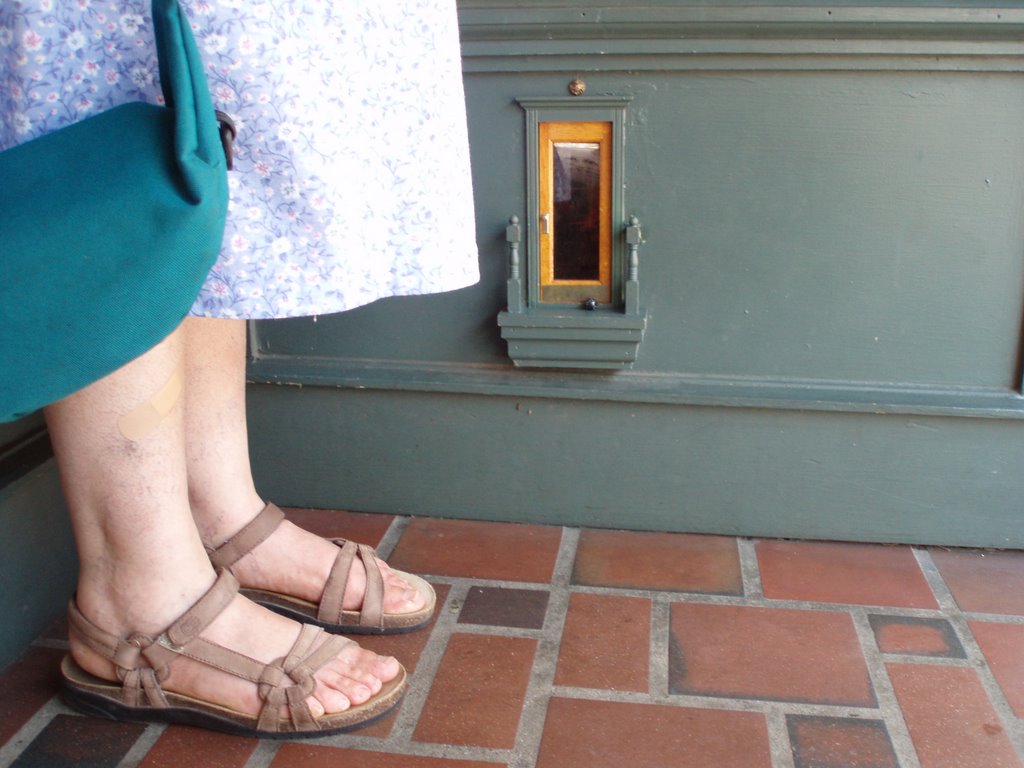
Fairy Doors reveal the presence of urban fairies throughout Ann Arbor. Througout the city, doors into small places are opening up. Roberta (feet at right) and I saw two doors that lead underneath the raised window display at Peaceable Kingdom on Main Street. Evidently, urban fairies live in this otherwise wasted space. A number of doors like this one resemble the doors of larger humanoids in the town, but I suspect that many others take other, more fairy-like forms.

Friday, August 11, 2006

Hot and Cold Lava in Hawaii

This is a story of travel to Hawaii, told for my Real Story blog for children who are intrigued by hot lava in a volcano.

One of our adventures has been to visit Hawaii Volcanos National Park. We have seen some of the lava that came out of a volcano a long time ago, and we have walked on rocky ground that was hot because the lava was still flowing underneath.


Once, as this picture shows, we saw lava dripping from a lava vent into the ocean, making a huge plume of steam. The steam is easy to see in the picture. If you click on this picture and see it enlarged, you can see a little red-hot lava running down the cliff by the ocean. Lava is melted rock. It is the hottest thing on earth, I think.


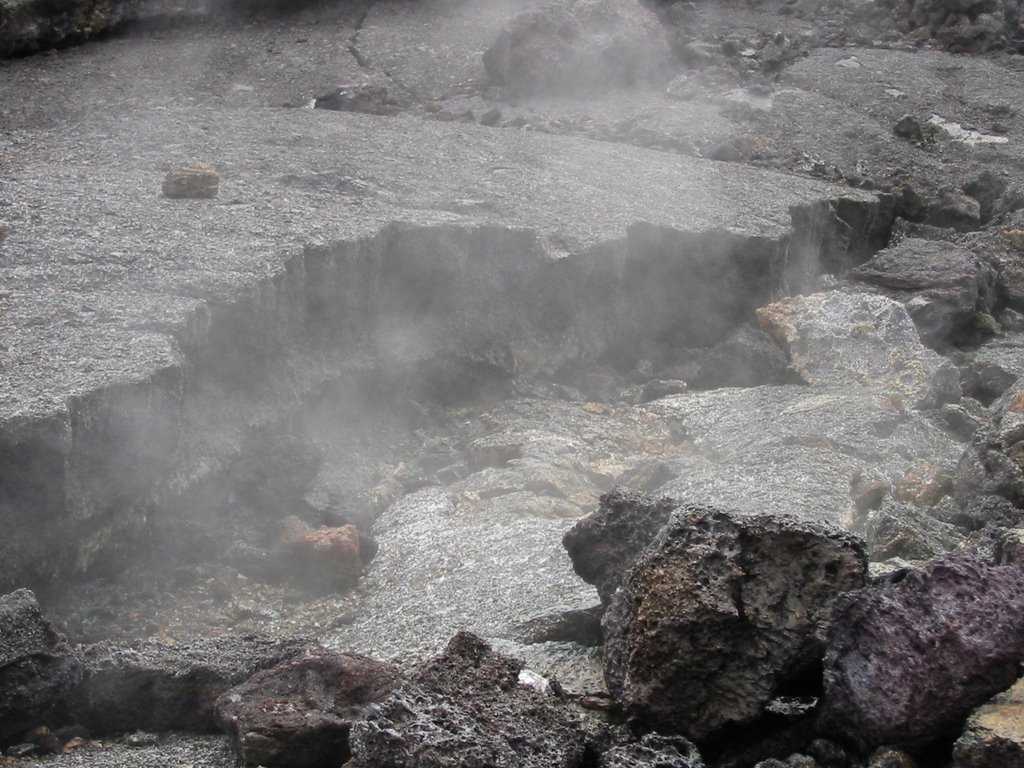
As you walk through the old lava fields, you smell funny smelling fumes coming up from cracks in the rock, because the volcanic action under the rocks produces all sorts of poison gas. It is very desolate but beautiful to walk through these large black rock fields. The gases leave colored marks on the black lava rock.


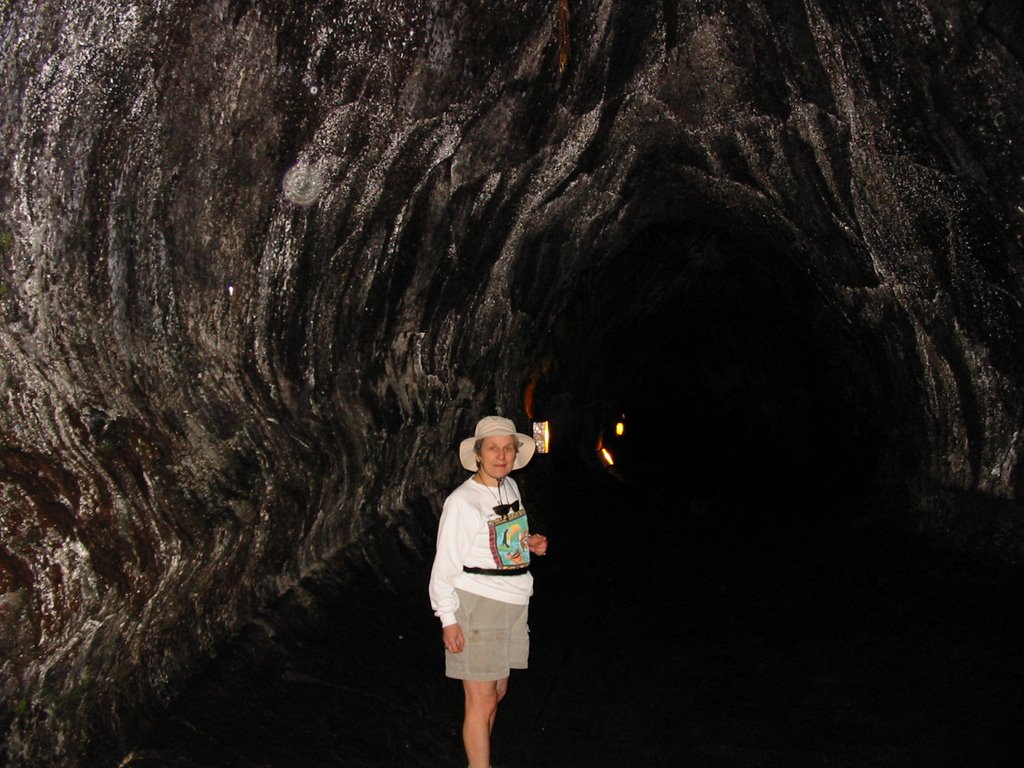
Farther from the most active volcano is old, cold lava. The lava went out of this volcano through tubes (or vents) underground. When the lava all flowed away, the lava tube was like a big cave. Now people walk through it every day.

Everywhere in Hawaii you can see different kinds of lava, because every one of the Hawaiian islands blew up from the Pacific Ocean in a volcanic blast. Some were as long as a million years ago. The volcano now sending lava into the sea is slowly creating new land at the edge of the biggest Hawaiian island.

I love the Hawaiian creation story that tells of the goddess Pele who made the land from moulten rock. It's a true creation story -- invented by observation. Different from any other mythology I know of.

Tuesday, August 08, 2006

Flowers

Thank you, Roberta!

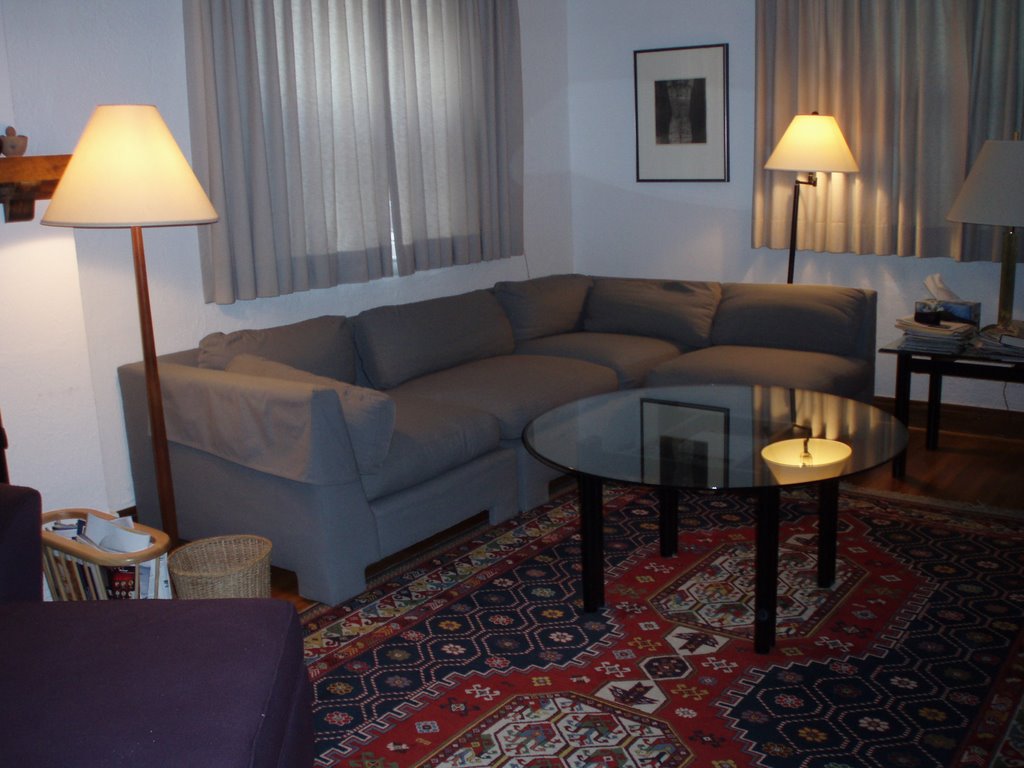
In our living room

The New Look:


The Old Look:


... and we do mean old. That old sectional lasted something like 30 years!