Saturday, December 03, 2011

Gates


The Kuromon, or Black Gate, now part of the Tokyo National Museum was once the gate to the Tokyo home of the noble Ikeda family, Daimyo lords of Inaba province. Its original construction was sometime in the Edo period (1603-1868), and it was moved to the musuem in 1954.

The second gate is the Red Gate of Tokyo University, not far from the campus guest house where we are staying. Next, a couple of random gates on the street, not far from the Red Gate.


And the gate next to the Isnsho-tei restaurant where we ate, in Ueno Park:


The gate to a little shrine beside an ancient well, now sandwiched between high-rises and other apartment buildings:


The gate to the Fox Shrine on a little island in a pond in Ueno Park:

AND one earlier thought:


Not far from the Red Gate of the University of Tokyo, in an un-noticeable alleyway, is an old wooden Buddhist Temple. A temple monk named Malcolm pointed it out to me after he also showed me how to buy and eat noodles in a little noodle shop. We went back at night and took a photo of the temple guardian.

Friday, November 25, 2011

Costco Sells Mona Lisa

Black Friday Sale

Friday, November 18, 2011

Lewis Chessmen in the News


I've always loved these -- and the NYT did a great job of describing their history.

Monday, November 07, 2011

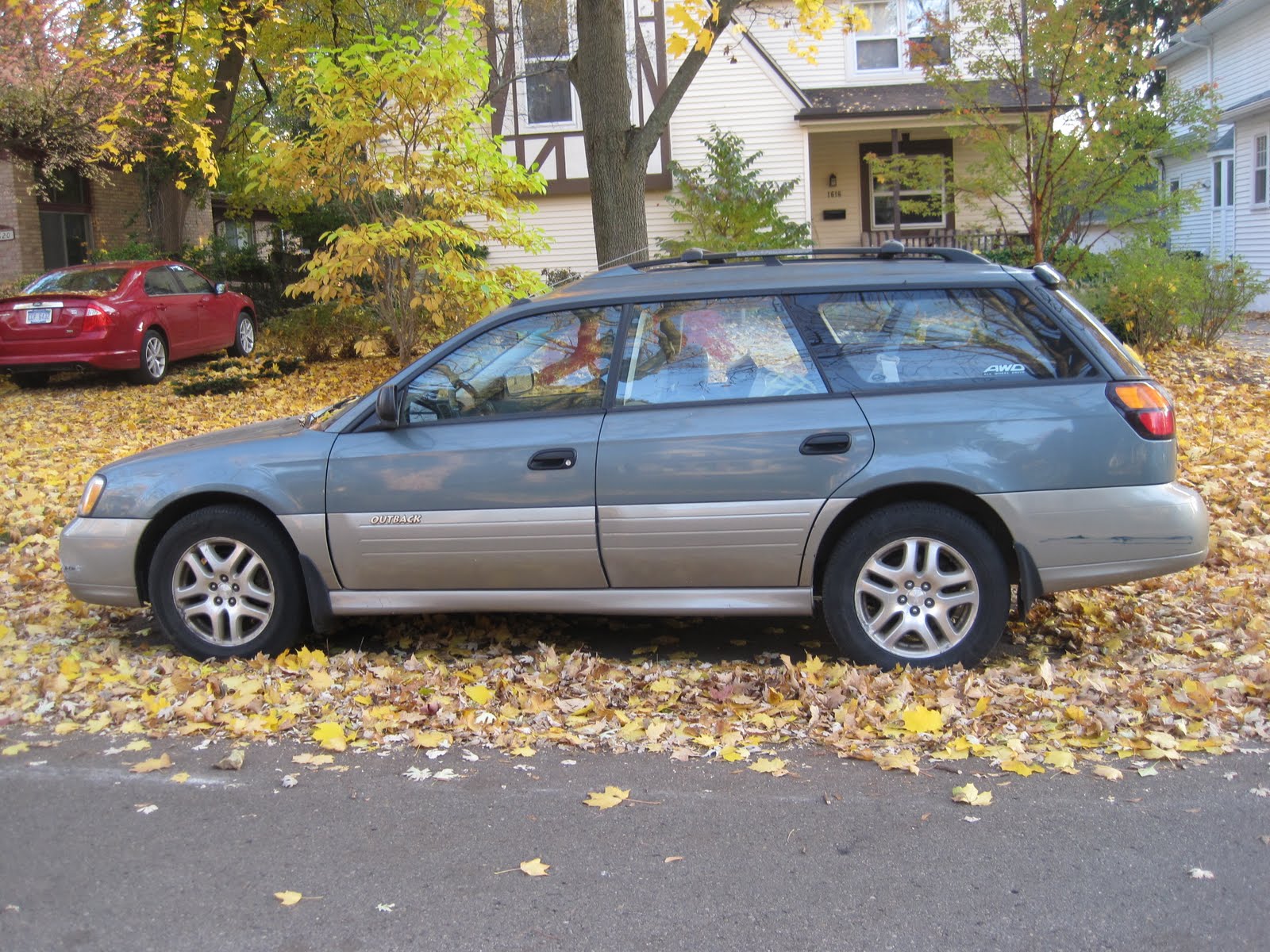
Goodbye, Car

Our car, yesterday, photo for Craig's list. We sold it this afternoon.


The new car, August 1, 2001. It served us well, but we just don't need it any more.

Monday, October 31, 2011

More in our neighborhood

autumn7918

autumn7906

The pumpkin on your right weighed 1150 pounds before carving. Tonight there will be a long line of kids at this door, because the owner has 1000 full-sized candy bars to give away!

autumn7922

Sunday, October 30, 2011

Halloween at my nieghbors' houses

autumn7696

autumn7900

autumn7902

Not yet in my photos: the 1150 pound Jack-O-Lantern in one neighbor's yard.

Happy Halloween!

Sunday, October 23, 2011

The Last Petunia of Autumn

autumn7883

... and other scenes from our neighborhood.

autumn7886

autumn7894

autumn7893

autumn7880

Wednesday, October 19, 2011

Short Visit to Fairfax

Alice on the monkey bars at Oakview school.

Miriam, on school patrol.

Alice and Miriam on the monkey bars. For comparison, see last year's post of them on the playground!

Route 68, the scenic way back, avoiding the Pennsylvania Turnpike.

Monday, October 10, 2011

Beautiful Weather in Michigan

waterloo-chelsea7815

waterloo-chelsea7796

Waterloo, Michigan: Sandhill cranes on a hillside and a view across the pond in the town itself. Glorious October sunshine!

Wednesday, September 28, 2011

More than the Mona Lisa

"I long ago stopped counting how many times I’ve seen the Mona Lisa. The most visited work of art at the Louvre is, alas, at the top of the must-see list of every houseguest on a first visit to Paris.
"Mona is surprisingly small (30 by 21 inches), dark and hard to see behind the barriers and bulletproof glass. After a while, she gets — dare I say it — boring. So do the Winged Victory of Samothrace (No. 2 in popularity) and Vénus de Milo (No. 3)."
Elaine Sciolino writes about "The Louvre Less Traveled" in a recent New York Times article.

What does she recommend? --
  • Michelangelo’s two marble nude Slaves
  • Samuel Van Hoogstraten, “View of an Interior or the Slippers” (shown at right)
  • A collection of paintings donated by by Victor Lyon in honor of his wife, Hélène Loeb -- including works by Monet, Degas, and other artists you wouldn't expect to see in the Louvre
  • Charles V’s gold scepter
  • ... and quite a few more
I always found many surprises on my visits to the Louvre, and this article makes me want to go back there, despite the overpowering size of the space and collections.

Friday, September 16, 2011

Lake Erie Birds

While I was taking photos of the birdwatchers (see yesterday's post), Len was really watching the hawks and taking pictures with his much better-equipped camera.

lakeeriebirds2821
I loved the lotus. I'm fascinated by the elaborate mechanism that makes the mud roll off of them, not long ago explained by science but of course observed for thousands of years. Their purity makes them a symbol in Buddhist tradition. A heron turned out to be hiding among the lotus blossoms and seed pods.

lakeeriebirds2812

lakeeriebirds2803

lakeeriebirds2819

Thursday, September 15, 2011

The Hawkwatch at Point Mouillee

lakeerie7708

lakeerie7713

This morning we took part in the Hawkwatch, waiting for migrating hawks and other raptors as they come across the Detroit River from Canada. From a few points in Lake Erie MetroPark and at Point Mouillee at the mouth of the Huron River, we saw several kettles of hawks and also some smaller groups of hawks, as well as an eagle, but they were all very far away. I've been a birdwatcher-watcher for years; the birdwatchers looked good today.

Also from Point Mouillee at the birdwatching dock we saw the Fermi Nuclear Reactor and its plume of steam, hunters bringing in their prey, water birds, and flowers.

lakeerie7697
The hunters: On the front of their boat, they had two Canada Geese. Their waders are printed with images of reeds and water.

lakeerie7709
The Power Plant.

lakeerie7701
Water Plants: Beyond these reeds, we could see a large stand of lotus. Some were still in bloom, some with the characteristic seed pods.

Wednesday, September 07, 2011

What if I need something to read?

Borders Books and Music is going out of business. Unless you live in a sealed paper bag, you know about this. In Ann Arbor, a sealed paper bag probably wouldn't be enough to keep from hearing the post-mortem laments and accusations. The latest one, at the Ann Arbor Chronicle, an online-only local journal, interviewed former booksellers and bookshop workers who were speculating about a replacement for the oldest Borders store in the chain. This flagship Borders was the largest retail business in the downtown area (I think). It occupied two floors of space in the building that was previously a department store: another type of business to which change has come more slowly than to its customer base in this constantly changing world.

Businesses seem to hate change, except the a few that figure out how to keep making money, and these get a lot of criticism for changing things. Journalists -- who have their own problems with change, to say the least -- seem strangely unaware of any big picture about the changes in the book industry. I'm especially annoyed by the writers of these screeds that blame people for shopping online, and seem to imply that the end of Borders is some kind of punishment for the people of Ann Arbor who used to buy books in stores but now are among the best book customers of amazon.

Yes, I used to shop at bookstores and now I rarely do, but things have changed a lot since I acquired the bookmarks below from Borders current and former downtown store and from other bookstores (some still in business). I have tons more like them, and I can't imagine how many have been thrown away.

bkmarks7683

I'm a reader. I need new reading material all the time. These days, I read a lot on my Kindle. Eventually I'll join the other members of my family who have moved on to reading on the iPad. I also read plenty of books. Almost all the magazines and newspapers I read are online, so I read on the computer as well. But the format in which I read has really made less difference to me than the way that I find what I want to read. I think the journalists writing about the book trade do not fully account for this fundamental change in the way that I and many others behave.

As so many journalism pieces have recently pointed out, the original Borders had a very excellent staff who selected and organized the stock especially well, and who could answer questions. At the information desk, they had a year of NYT Book Reviews and other useful material. Indeed, if you remembered vaguely having read a review somewhere, they could often locate it almost by magic, and produce whatever book you almost recalled. Now, if you remember reading about a book, you can use google or the journal's index find such things easily -- if you didn't keep some type of electronic record of what you saw. But that's not all that has changed.

In the days when I was acquiring all those bookstore-ad bookmarks, I found out about newly published books by reading reviews in the New York Times Book Review, the New Yorker, sometimes the Atlantic or the New York Review of Books, and in a few other places. I browsed at the public library, I used the card catalog in the university library and I read through the bibliographies of scholarly works, as well as going to helpful bookstores. At the time, I didn't find these methods cumbersome or time-consuming, but I do now! Changes in libraries, especially online card catalogs accessible from home that tell you if a book is available, made another big change for readers, but I'll stick to talking about bookstores.

My book-review horizon has broadened widely because so many more journals, newspapers, blogs, and cross-referenced catalogs are available to me on my computer. Every week I read reviews not only in sources I used before (they're all online and most have added a great deal of material beyond their print editions), but also in British reviews like the Guardian online, in newly invented reviews like Tablet online magazine, in blogs, and in many other places that weren't accessible before or weren't invented yet.

Besides speeding up and expanding my information on new books, this broad access has allowed me new ways to find old books. For example, thanks to a reference in a blog I read, I recently heard of an article written by W.H.Auden in 1948 about mystery novels. His article was available online. In it, Auden praised the novels of Freeman Wills Crofts -- a new name to me. Soon after, I read two of these on my Kindle, one free, one $2.99. Yes, something like this could have happened 20 years ago, but it would have been very cumbersome and involved microfiche and perhaps a very complicated and maybe expensive search for an out-of-print book!

Here's another contrast, between my experience and that of the Chronicle writer. I recently read a review of the book "1493: Uncovering the New World Columbus Created." I immediately ordered it from amazon.com for around half the list price, and the book arrived in a couple of days. Here's the Chronicle writer's experience with the same book:
"On a recent Friday afternoon I spent the better part of an hour browsing her [Nicola Rooney of Nicola's books] shelves for my husband’s birthday presents – I came in for Charles C. Mann’s new '1493: Uncovering the New World Columbus Created' ... Rooney and two of her staffers spent a good 10 minutes – a long time in a small shop – determined to hunt down one of the three copies of '1493' that were, the computer indicated, in the store. None were to be found. So she took my info and promised to let me know when the next copy came in (it was expected, and indeed arrived, on Monday)."
Yes, this is a great level of service, but it saved neither time nor money for the writer. In fact, she had to drive to the store an extra time, while UPS delivered the book to my front porch. For many reasons I choose to pay amazon.com the annual fee for free 2-day delivery of all purchases, so I suppose that my total cost should be incremented slightly. But I buy so many books on this deal (as well as watching streaming video for the same fee) that the increment is truly small.

Money isn't everything, but the savings on books one buys online are considerable. I resent the suggestion that I owe it to somebody or something to spend more by buying books in stores. I'm honest about it: if I find a book by browsing in a store and decide to buy it, I don't just write down the reference, but I buy it there. There's much more involved than just browsing. If I want to make a charitable contribution, this isn't it.

Automated recommendations from amazon.com are often compared unfavorably to a discussion with a live bookseller (or librarian). On the whole, I agree, though I admit that the amazon algorithm sometimes results in good suggestions. There are other services from amazon that I find useful, though. For example, I like the ability to maintain lists of books for future reference. I have several "Wish Lists" which actually represent a selection of just about any books that I might read eventually. If a book is too expensive or rare, I put the library call number in the notes; sometimes I also note where I read about a book; however, no notes are really required, and an amazon user can add books to a wish list with just a click and no typing.

After I read the books, the lists also serve as kind of a record of my reading history -- my family are warned not to use these lists as buying suggestions, as I might have them already. If I had been super organized in the past, of course I could have dreamed up a note-card-and-cross-referencing scheme that would have had this function, but I never was that organized or willing to devote the time to writing out all the information that amazon links to.

The combined capabilities of google searching and google books, online reviews and archives, and the collective force of the amazon catalog just makes it all so easy!

I have no idea if the simultaneous changes in the world of journalists makes it harder for them to see the big picture of the changes in the world of readers (who may also be book buyers). I've seen this gap in quite a lot of the coverage of the demise of Borders. By setting this tone, I think the Chronicle article also set up the type of comments that were made: at this point there are close to 30 of them, mainly along the same lines as the article, worrying about the lack of bookstores. I see a gap in these discussions, with much too much interest paid to book sellers, and not quite enough paid to the question of the new Internet-wide world of finding something to read.

Sunday, September 04, 2011

A Walk around Argo Pond

laborday7637

laborday7639

laborday7643

laborday7641

This is a beautiful place to walk. Around a year ago, I posted this.

Thursday, September 01, 2011

Mona Lisa Barbie

Here she is: my Mona Lisa Barbie. This is my first -- and last -- Barbie doll in my whole life. I guess. Unless they make a Leonardo Ken with a paintbrush or something.

Wednesday, August 24, 2011

Patti Smith and Arthur Rimbaud

In Patti Smith's autobiography, Just Kids (our next book club selection) she often refers to the importance of the French poet Arthur Rimbaud in her life and her development as a poet. As I read, I made a note to look up more about Rimbaud -- in fact, I've been meaning to find out more about him for years. Conveniently, the current New Yorker includes the perfect answer to my questions -- REBEL REBEL: Arthur Rimbaud’s brief career by Daniel Mendelsohn. The article includes a biography of Rimbaud, a discussion of his appeal to adolescents and maybe other people, and even a couple of references to Patti Smith's love of Rimbaud. Above all, the author tries to explain the "powerful mystique that has seduced readers from Marcel Proust to Patti Smith."

Mendelsohn writes:
"The peculiarly adolescent quality of the poet’s life and work, the desire to rebel against whatever milieu he happened to find himself in—the schoolboy against school, the wunderkind against his admiring hosts, the poet against poetry—undoubtedly accounts for his particular appeal to teen-agers. (One statistic that Rimbaldians like to cite is that one in five French lycéens today claims to identify with the long-dead poet.) ...
"Ashbery ... was sixteen at the moment of impact, as was Patti Smith, the author of what is, perhaps, the most moving testament to the effect that a reading of Rimbaud might have on a hungry young mind. 'When I was sixteen, working in a non-union factory in a small South Jersey town,' she writes ... 'my salvation and respite from my dismal surroundings was a battered copy of Arthur Rimbaud’s Illuminations, which I kept in my back pocket.' The anthology, she adds, 'became the bible of my life.'”
Now I understand why I heard so much about him when I was young, and so few people seem to talk about him any more. I admit, I bought some volumes of his poetry but didn't get around to it. I wonder why it took me this long to read even a single article.

Monday, August 22, 2011

Reading Patti Smith's "Just Kids"


I distinctly remember that the audiences seemed divided between those who thought Patti Smith was a goddess and Allen Ginsberg an afterthought, and those (like me) who hadn't really heard of Patti Smith, but thought Allen Ginsberg was an American legend. I'd never seen her before, but had seen him at events in Berkeley or San Francisco in the 1960s, most notably the Human Be-In, a memorable Happening in 1967. His readings in 1995 and 1996 made a lasting impression on me -- hers, not so much.

Just Kids -- which won the National Book Award, by the way -- seems to me to echo this divide, between the slightly younger punk musicians and the older Beat and Hippie generations. The New York Times reviewer said that Just Kids was "the most spellbinding and diverting portrait of funky-but-chic New York in the late ’60s and early ’70s that any alumnus has committed to print. The tone is at once flinty and hilarious, which figures: she’s always been both tough and funny, two real saving graces in an artist this prone to excess. What’s sure to make her account a cornucopia for cultural historians, however, is that the atmosphere, personalities and mores of the time are so astutely observed."

Right. But I really think her little life was eclipsed by a lot of the other things that were going on then, and I'm not at all sure her poetry has really lasted. Not like Ginsberg's! And though her main topic, the relationship she had with Robert Mapplethorpe, is compelling, it leaves me a little unconvinced. But I don't think I'll try to expand that topic now.

Thursday, August 18, 2011

Family Reunion

Here's half the family that gathered this past weekend. What fun!

Friday, August 05, 2011

Mona Lisa Sells Books?

As usual, when a book talks about Mona Lisa but it's not really relevant, my BS detectors get very busy. In the NYT book review, "Sex, Lies and Data Mining" by Wesley Yang discusses a new book by two neuroscientists, Ogas and Gaddam.

The reported results in the sensationally titled A Billion Wicked Thoughts sound very much like a bunch of cliches: "Men like pornography. Women like romance novels. 'Men’s brains are designed to objectify females,' Ogas and Gaddam write. Since men’s only concern is with the biological fitness of women for child­bearing, everything they need to know to feel desire is visible to the naked eye: 'The shapely curves of female ornamentation indicate how many years of healthy childbearing remain across a woman’s entire lifetime.'”

And where's Mona? Oh yes, "The enigma of the Gioconda smile; the technologically engineered 'crave­ability' of fast food; the alluring, 'alpha among alphas' quality of the paranormal hero; that climactic moment beamed to watchers on a hundred million laptop screens: all rely on the artful manipulation of our brains."

Really. I think we've seen all this before. Just because they were using internet search data as their source evidently doesn't mean we get any new ideas. I think I'll skip reading the book itself, though maybe that's unfair.

Sunday, July 24, 2011

New Study

Here's the new study arrangement: a big desk, leather chair, and reading lamp from Ikea. All the battered old furniture went to the dump or the Salvation Army. When we returned from our 12 weeks out west, we could really see how bad it looked. We also purged a lot of old saved paper -- our recycle bin runneth over. No hoarders here. Well, not counting the closets in the attic. The living area of the attic is also very much cleaner now.