 Here's the new study arrangement: a big desk, leather chair, and reading lamp from Ikea. All the battered old furniture went to the dump or the Salvation Army. When we returned from our 12 weeks out west, we could really see how bad it looked. We also purged a lot of old saved paper -- our recycle bin runneth over. No hoarders here. Well, not counting the closets in the attic. The living area of the attic is also very much cleaner now.
Sunday, July 24, 2011
New Study
Here's the new study arrangement: a big desk, leather chair, and reading lamp from Ikea. All the battered old furniture went to the dump or the Salvation Army. When we returned from our 12 weeks out west, we could really see how bad it looked. We also purged a lot of old saved paper -- our recycle bin runneth over. No hoarders here. Well, not counting the closets in the attic. The living area of the attic is also very much cleaner now.


Monday, July 04, 2011
Five Lakes
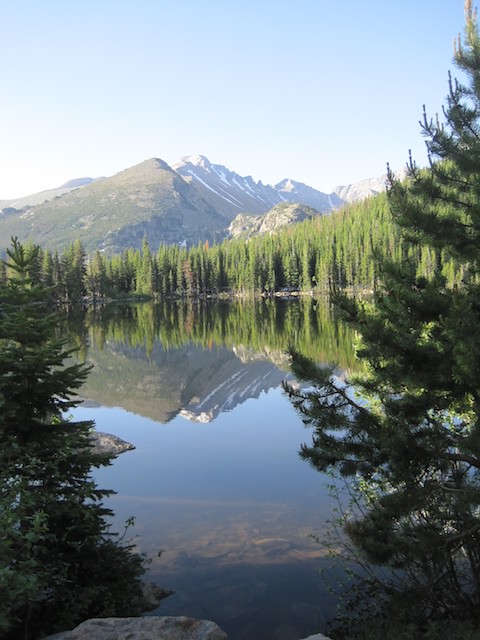
We managed to arrive at the Bear Lake hiking area by 7:00 this morning to avoid the July 4th crowds in Rocky Mountain National Park. Our reward was not only being nearly alone for the first hour of hiking, but also splendid morning views of the snow caps mirrored in Bear Lake (above). Other lakes we saw while hiking today: Dream Lake, Nymph Lake, Emerald Lake, and Sprague Lake. We also hiked up to Alberta Falls.
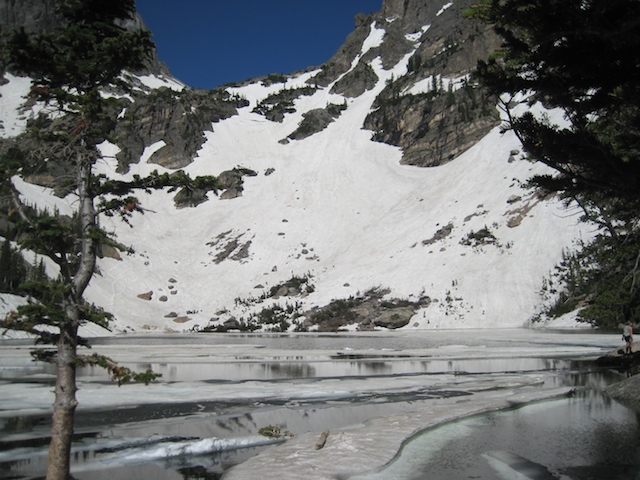
Emerald Lake is still mainly frozen. A few daring (or maybe reckless) hikers were walking on the ice. We had to walk on quite a few snow piles that still cover the trails. By the time we were returning down the trail, the crowds were really making the surfaces hard to walk on. At one location, a number of energetic hikers were sliding down the snow on their backs. Although it's steep in places, the trail is mainly not very hard to walk where it's dry.
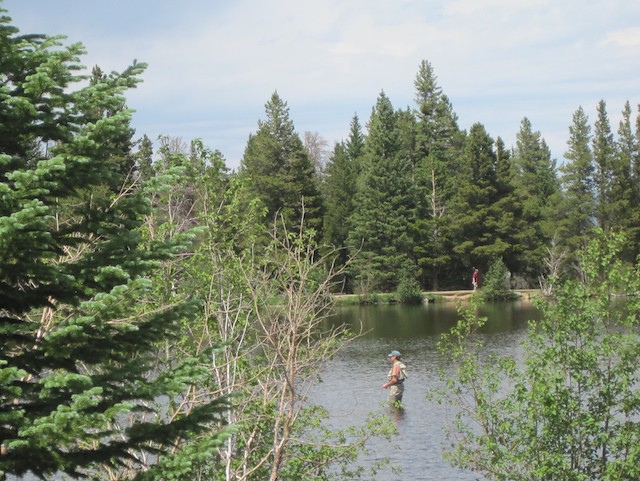
Sprague Lake, our last stop before leaving the park, was "improved" around 100 years ago by a resort owner who brought vacationers here before the creation of the National Park. He wanted to make the lake more attractive to fishermen -- evidently, they still like it. Much lower than the other lakes, Sprague is completely unfrozen and the trail around it is a very easy, flat walk on a smooth surface.
In total our hiking today was over 6 miles.
Sunday, July 03, 2011
Rocky Mountain National Park
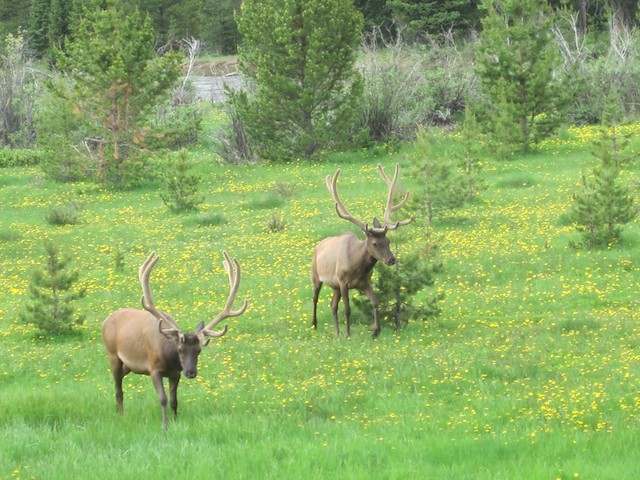
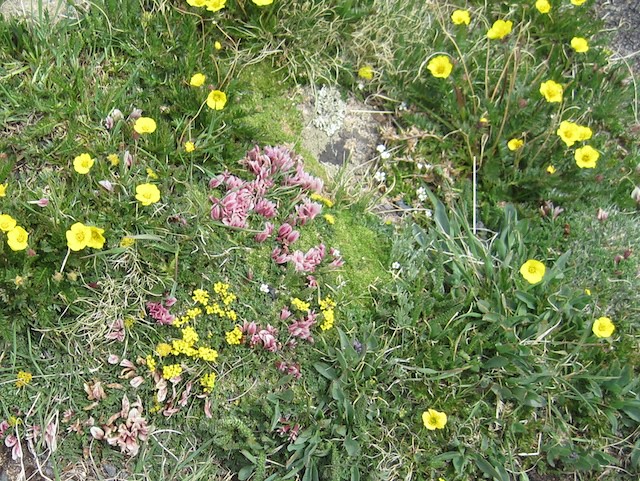
We spent the afternoon driving on the famous ridge trail, and walking a bit at the highest point. The Alpine tundra is in bloom, and though the flowers are tiny, they are extremely delicate and beautiful.
Saturday, July 02, 2011
Hunter Creek Trail
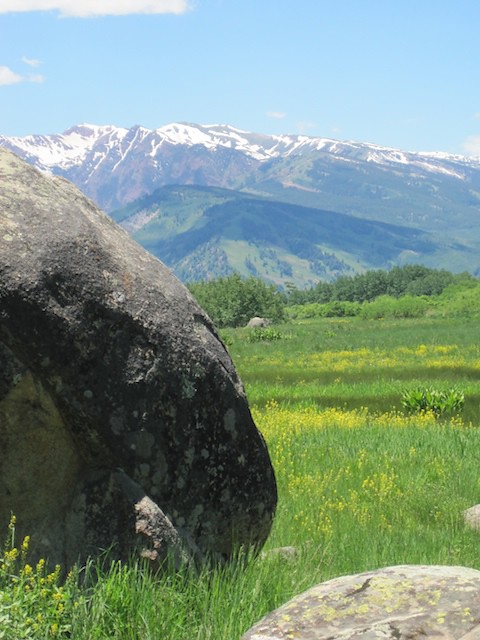
Our Aspen hike of the day: Hunter Creek Trail above Aspen, looking toward the Maroon Bells, whose color is definitely maroon.
Happy Independence Day!!
Repeated from last year: the best version of the Sousa March I can find. We heard a good wind quintet play it in front of the Paradise Bakery and Ice Cream store here in Aspen last week, but I don't think there's a recording.
And for nostalgia, here's a photo of Evelyn and our dog Dolly in the Burns Park neighborhood parade after she was in fifth grade:

We leave Aspen tomorrow and plan to be in Rocky Mountain National Park for the 4th.
Sunday, June 26, 2011

Wednesday, June 22, 2011
Flower Photos
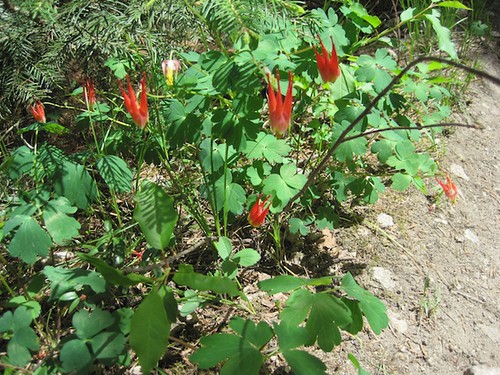
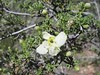
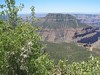
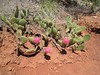
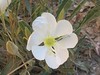
The scenery we've been seeing is so spectacular that it's hard to focus on smaller things. We've taken hundreds of photos, mostly of the grandeur of the Rockies, the breath-taking vistas of the North Rim of the Grand Canyon, the huge sandstone rock formations of Zion, and the amazing natural arches at Arches National Park. But the littler things, though maybe not majestic, also create the fabulous nature of the experience.
Flowers, tree branches, cactus, and other plants are a good example of the little beautiful things. Flowers grow out of cracks in the rocks on the cliffs at Zion; succulents and cactus grow in what appears to be totally arid sand, and they are everywhere in the woods and slopes in Aspen. Inspired by my blogger friend Jeanie at The Marmelade Gypsy, I've been taking close-ups or stepping back and trying to capture their images in the landscape. And now I've made a Flickr set from a number of these photos, from hikes, drives, Grand Canyon ATV tour, and strolls we have taken.
Flowers, tree branches, cactus, and other plants are a good example of the little beautiful things. Flowers grow out of cracks in the rocks on the cliffs at Zion; succulents and cactus grow in what appears to be totally arid sand, and they are everywhere in the woods and slopes in Aspen. Inspired by my blogger friend Jeanie at The Marmelade Gypsy, I've been taking close-ups or stepping back and trying to capture their images in the landscape. And now I've made a Flickr set from a number of these photos, from hikes, drives, Grand Canyon ATV tour, and strolls we have taken.
To see my 23 favorites of these photos at Flickr click on any one of the thumbnails below:


Monday, June 20, 2011
Last Rays of Sun
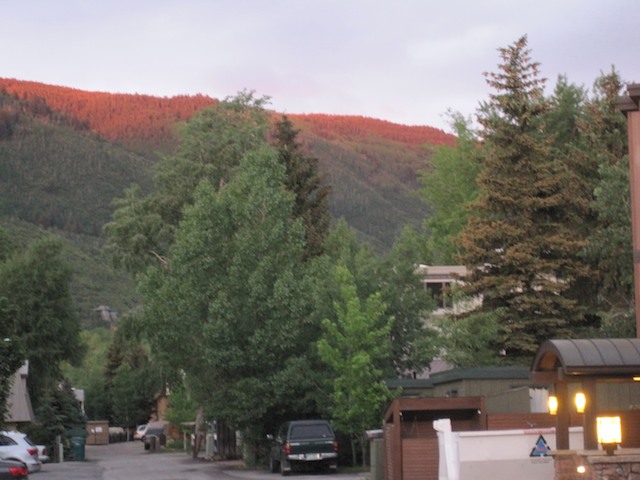
We watched the tops of the mountains as the last rays of the setting sun made them first golden, then deep red. Finally, the mountainsides were unlit and the clouds were pink. Then darkness.
Aspen is Beautiful
 The mountains are indeed majestic! But I'm too busy having fun to post much about our biking, hiking, and other activities.
Sunday, June 12, 2011
Arches National Park

Balancing Rock, Snow-Capped Mountains in the Distance

Delicate Arch from a distant viewpoint

Len photographing a Window Arch
Friday, June 10, 2011
Cycling in Zion
Bicycles are a perfect way to see the huge cliffs of Zion National Park. Only the park shuttle buses are allowed on many of the roads, and the drivers are very mindful of cyclists. This morning while it was still cool, we cycled up hill from the Lodge where we're staying to the Temple of Sinawava, the rock formation at the end of the road.

A mile of paved trail allows you to continue walking along the rushing river. This area has a fascinating little ecosystem with swamp plants and vertical cliffs covered with vegetation. At the end of the trail is The Narrows which we remembered as a wonderful experience from our previous trip, but at the moment the river is much too high to walk upstream in the river bed as we did then. The next photo shows the beginning of The Narrows:
 On the way down we stopped at the Weeping Rocks where water oozes out of the rocks and drips down the rock face.
This afternoon, we decided to cycle downhill from the Lodge on the very steep road from to the Visitor Center. This part of the road is much steeper than the ride we took this morning: the road is above the cascading river. After the junction, the road is unrestricted, but there's a beautiful paved bike path for around the last 2 miles.


From the Visitor Center we and our bikes rode back up on the shuttle bus -- what luxury! We returned to the Temple of Sinagawa and repeated the downhill ride that we had done in the morning. Of course the effects of light vary throughout the day so we enjoyed it again.

A mile of paved trail allows you to continue walking along the rushing river. This area has a fascinating little ecosystem with swamp plants and vertical cliffs covered with vegetation. At the end of the trail is The Narrows which we remembered as a wonderful experience from our previous trip, but at the moment the river is much too high to walk upstream in the river bed as we did then. The next photo shows the beginning of The Narrows:
 On the way down we stopped at the Weeping Rocks where water oozes out of the rocks and drips down the rock face.
This afternoon, we decided to cycle downhill from the Lodge on the very steep road from to the Visitor Center. This part of the road is much steeper than the ride we took this morning: the road is above the cascading river. After the junction, the road is unrestricted, but there's a beautiful paved bike path for around the last 2 miles.


From the Visitor Center we and our bikes rode back up on the shuttle bus -- what luxury! We returned to the Temple of Sinagawa and repeated the downhill ride that we had done in the morning. Of course the effects of light vary throughout the day so we enjoyed it again.
Thursday, June 09, 2011
Zion National Park

From Zion Lodge where we're staying we walked behind a now-small waterfall -- it was big earlier in the spring. We continued to the cliffs above, where shallow ponds are trickling across stone shelves and dropping off the edge. The sheer height of the cliffs is amazing.
We continued along the trail to a viewpoint above the Virgin River, which flows in the deep Zion valley. Below you can see the river and the rocky faces on the other side from the trail.

Wednesday, June 08, 2011
my tired feet

The National Park and National Forest at the North Rim of the Grand Canyon afford a vast number of views of the canyon from different locations. The "rim" is actually a series of peninsulas or mesas separated by smaller canyons. We went to many of them, and walked all day. More later when I have better internet!
Tuesday, May 31, 2011
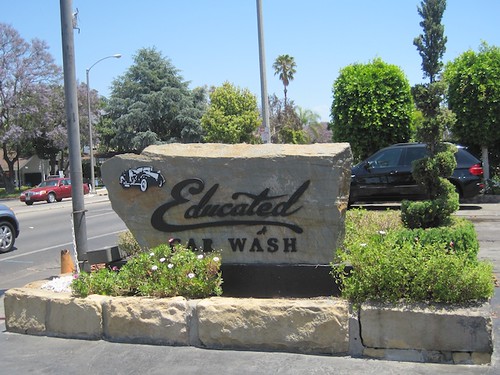
The World's Most Beautiful Car Wash?
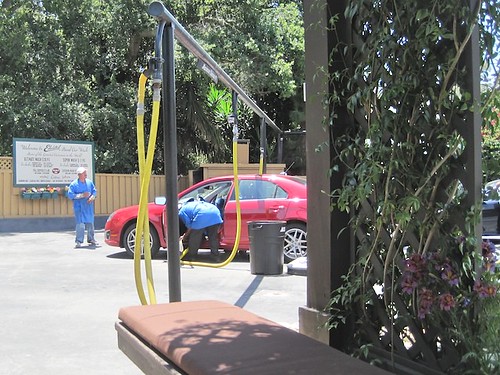
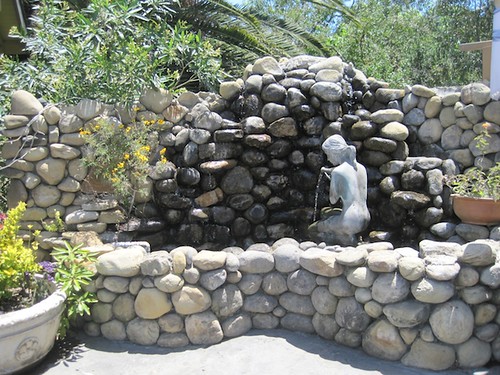
The air here in Santa Barbara, surprisingly, deposits a fair amount of dirt on the car, so I took it to a car wash that advertises that it doesn't use machines, only very soft brushes and lots of TLC. They begin by vacuuming the car, scrub with the brushes, and proceed through a tunnel of high-pressure water hoses and vacuum-drying. While you wait, there are several beautifully landscaped seating areas with trellises of flowers and shade. In one corner, there's even a fountain.

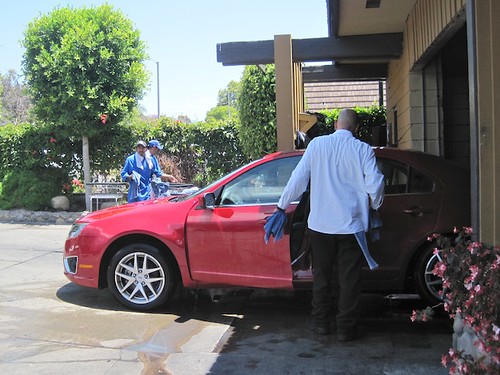
When the car comes out, then lots more hand work, cleaning the inside of the windows, polishing the outside, and even cleaning the inside of the sunroof. The name of this place is Educated Car Wash -- in addition to all the service and comfort, their gas is cheaper than any other gas station I have found!
Monday, May 30, 2011
Watching Whales
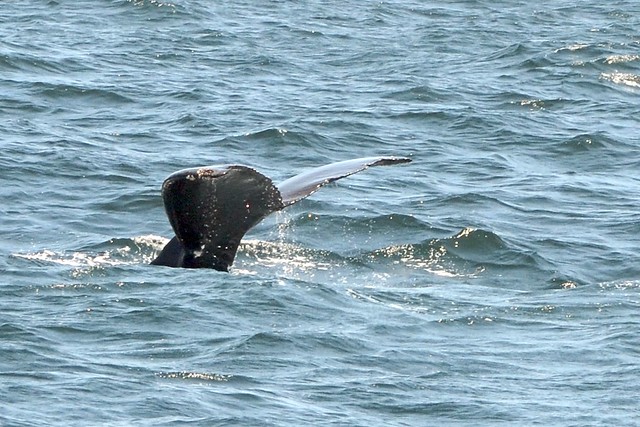
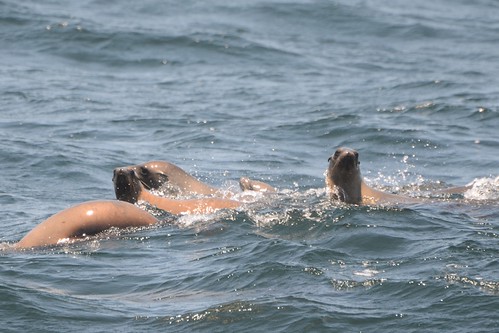
Our whale watching cruise in the Santa Barbara channel today was unfortunately a bit windy, but the skillful captain did find one beautiful whale. It was repeatedly coming up, diving, and blowing out its blow-hole. We were sometimes close enough to hear the snort as the cloud of vapor rose up from the waves. We also saw some dolphins, sea lions, and many birds.
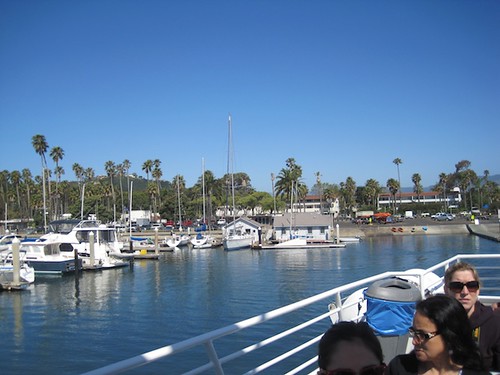
The wind served to keep the fog or clouds away that sometimes make conditions a bit gloomy in Santa Barbara, so the harbor looked lovely and we had good views of the Channel Islands as we approached them.
Tuesday, May 24, 2011
Borges on Memory
"Funes the Memorious" is Borges' story of a simple village man whose "perception and memory were perfect." Funes remembered every visual and bodily detail of every experience in every day he had lived, and learned languages with great ease. However, "he was not very good at thinking," wrote the story's narrator. His remarkable powers had appeared after a crippling accident which knocked him unconscious -- an event that often changes a person's mental abilities.
Before the accident Funes had possessed only one unusual capability: always knowing what time it was. Confined to bed after the accident, and choosing to spend much of his time in the dark, Funes was in the process of inventing numbering and classification schemes to allow him to deal with his overwhelming memories and perceptions. He borrows a book in Latin from the narrator and teaches himself to read it -- by chance it includes Pliny's chapter on memory prodigies, which Funes says "he is amazed that such cases were thought to be amazing."
Joshua Foer's book "Moonwalking with Einstein" which I wrote about last week describes a variety of memory specialists who have much in common with Funes, and for this reason I found Borges' descriptions especially interesting. Funes seems to me to illustrate very well the limits of having a fantastic memory, as well as reflecting some of the actual realities of people with unusual gifts like Funes' original ability to know what time it is. Funes seems to be an exaggerated -- or magically real -- example of what used to be called an idiot savant. Clearly, the story is more than a clinical description. It includes a characterized (and perhaps not entirely reliable) narrator, a setting in late-19th-century Uruguay, and descriptive details that are very enjoyable.
Foer says of this story: "Perhaps, as Borges concludes in his story, it is forgetting, not remembering, that is the essence of what makes us human. To make sense of the world, we must filter it. 'To think,' Borges writes, 'is to forget.'" (Moonwalking, p. 37)
Before the accident Funes had possessed only one unusual capability: always knowing what time it was. Confined to bed after the accident, and choosing to spend much of his time in the dark, Funes was in the process of inventing numbering and classification schemes to allow him to deal with his overwhelming memories and perceptions. He borrows a book in Latin from the narrator and teaches himself to read it -- by chance it includes Pliny's chapter on memory prodigies, which Funes says "he is amazed that such cases were thought to be amazing."
Joshua Foer's book "Moonwalking with Einstein" which I wrote about last week describes a variety of memory specialists who have much in common with Funes, and for this reason I found Borges' descriptions especially interesting. Funes seems to me to illustrate very well the limits of having a fantastic memory, as well as reflecting some of the actual realities of people with unusual gifts like Funes' original ability to know what time it is. Funes seems to be an exaggerated -- or magically real -- example of what used to be called an idiot savant. Clearly, the story is more than a clinical description. It includes a characterized (and perhaps not entirely reliable) narrator, a setting in late-19th-century Uruguay, and descriptive details that are very enjoyable.
Foer says of this story: "Perhaps, as Borges concludes in his story, it is forgetting, not remembering, that is the essence of what makes us human. To make sense of the world, we must filter it. 'To think,' Borges writes, 'is to forget.'" (Moonwalking, p. 37)
Monday, May 23, 2011


Monday, May 09, 2011
"Moonwalking with Einstein"
 Joshua Foer's book Moonwalking with Einstein takes an obscure topic and unexpectedly makes it interesting and relevant. The book has three elements often found in solid modern journalism.
First, Foer includes many interviews with eccentric people. He describes and interviews several amnesiacs and idiot savants who can remember vast amounts of stuff naturally. He also presents a few flamboyant memory experts who are eccentric or maybe phony con-men.
Second, he describes the relevant neuroscience -- here, how memory works in the brain. His explanations are really useful and intriguing.
Third, Foer relates his personal experiences -- how he learned the ancient "art of memory" by working with other memory champions and thus won the 2006 USA Memory Championship. In particular he describes what was going through his mind as he memorized a deck of cards -- including envisioning moonwalking with Einstein to fix one card in memory.
I enjoyed reading all of this, and learned a lot. However, I'm not really inspired to try developing my own technique for Memory Championship types of tasks such as learning strings of digits or the order of cards in a shuffled deck. Some years ago I read Frances Yeats' book The Art of Memory, so I was aware of the ancient trick of using a familiar house or other building as repository -- Memory Palace -- for things that should be memorized. I was impressed by the way that modern enthusiasts have re-adapted this technique.
Foer acknowledges that there are many aspects of memory that he didn't work on or fully understand, and that the routine memories that people often worry about -- like where one put one's car keys -- aren't improved by the Memory Palace approach or even by some of the other methods he hints at. As a result I have questions that I'd like to know after reading the book:
- How do musicians memorize works like concertos that must be utterly perfect to play with an orchestra?
- How do actors memorize their roles -- he alludes to this but doesn't explain, and they don't seem to do it by the ancient Memory Palace technique.
- How do children seemingly memorize everything? Do they really lose their abilities as they develop reading skills, or is something else actually happening in their brains?
- Do today's teenagers still memorize the lyrics to zillions of popular songs as my friends did? He mentions that singing is a technique for remembering (like the Australian Aboriginal Song Lines that allowed them to memorize maps) but doesn't develop the idea more.
- How do you memorize a poem? He didn't actually seem to know the answer to this.
- And how does a Pensive work? Harry Potter witnessed older wizards pulling smoke-like memories from their brains. And via the Pensive, he was able to re-experience these memories and make them his own. But what's the wizard neuroscience? (Yeah, I know, there aren't really any wizards.)
Sunday, May 08, 2011
Bird Photos
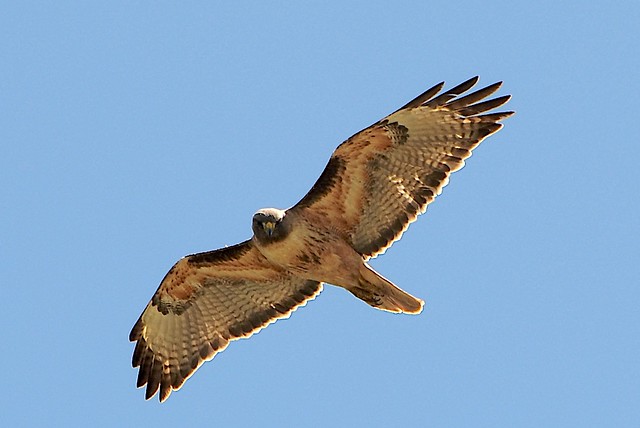
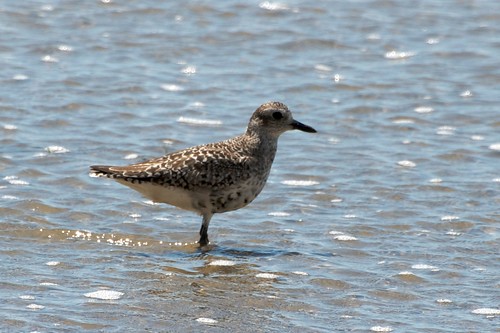
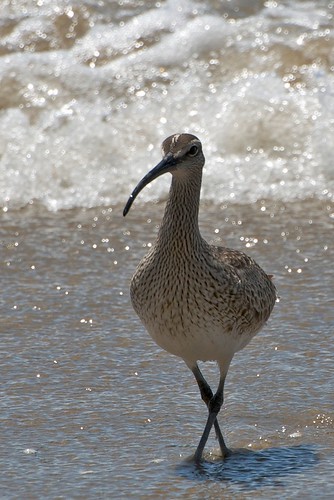
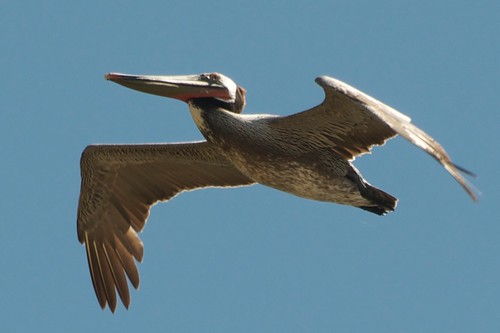
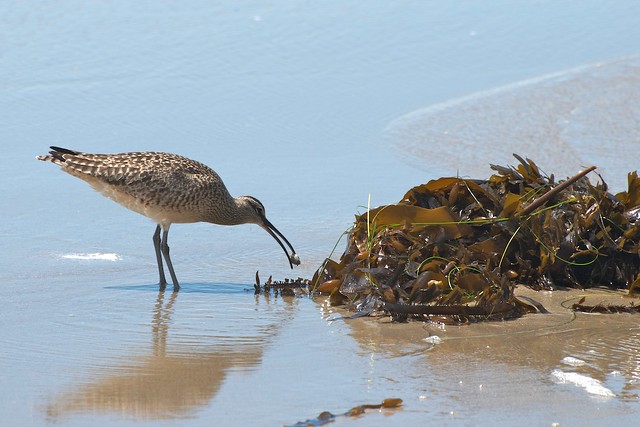
At Arroyo Burro beach today, Len tried out his new camera on bird photos. The hawk above was particularly cooperative.
Saturday, May 07, 2011
I saw "Thor"
 I quietly laughed a lot while watching "Thor" last night. Campy. Cliched. Anthony Hopkins the brave old god Odin trying to prepare his successor for appropriate response to the ancient enemy Frost Giants. Loki the shifty-eyed trickster. Thor the trigger-happy hunk. Asgard the unreal citadel of gods guarded by one who understands all the problems the gods have. Earth the undesirable place to go into exile with one's radioactive magic hammer. (The look of Asgard reminded me of the furutistic Jade Mountain resort that we visited in December.) Natalie Portman the dedicated scientist losing her commitment to rationality on two levels in response to the superpowers and super body of the god who came out of the sky. Wait. What?
Was there any pop movie that didn't echo someplace in "Thor"? Natalie Portman's woman scientist learning about alien beings (Norse gods in this case) was named "Foster" no doubt in honor of Jodie Foster's role in "Contact." Thor and the fire-spitting frost giant walk dramatically towards each other down the main street of the little town out West -- I was waiting for the clock hands moving towards High Noon. Men in black represent the government's interest in the impact crater where Thor just landed. Even the city of Asgard somewhere outside of reality reminded me of the town in the Gene Autry Western/sci fi "The Phantom Empire" though I'm sure many other sci fi films have used similar combinations of ultra-modern architecture to create an other-worldly atmosphere.
The serious critics have serious problems with this movie. Too bad for them.
Subscribe to:
Posts (Atom)