Friday, November 30, 2012

We have a Christmas Market in Ann Arbor, too


This evening, we went to the Farmers Market and Kerrytown for the Ann Arbor Kindlefest or Weihnachtsmarkt -- also known as Midnight Madness. Food booths; hand-made gift items, Christmas decorations, and greens, a wine-tasting at the wine store, sales of all goods in other stores at 10 or 15% off, and many musical groups attracted huge crowds. Downtown, a few blocks away, we saw gallery parties, more musical groups on the street, an Elvis impersonator, and more crowds.

Glühwein, warmed in huge metal urns over portable camp stoves, was made from Charles Shaw wine (familiarly known as 2-buck Chuck from Trader Joe's -- same selection of wine at one gallery where we stopped). Booths offered "Konditorei" and "Würst" with sauerkraut. I don't know if the German names reflect the ethnic German culture that once was a major part of Ann Arbor, or if there's some other reason for the German signs. Of course there was also a booth selling salsa, and others with a broad variety of food types.

Inside we enjoyed some music:


Our favorite group among those we saw was playing hot jazz in a corner of the Kerrytown shops next to a door. We were able to stand on the stairs and enjoy their music for a while.

Outside people gathered around numerous fire pits and even toasted marshmallows. Luckily, it wasn't terribly cold or windy.


Sunday, November 18, 2012

A Walk in the Park

Today we enjoyed a beautiful Sunday afternoon bathed in autumn sunshine. It seemed like a perfect time for a walk. We were diverted by a realtor open house not far from our house. The property for sale had a lot of charm because many of the rooms had not been much changed since the house was built in around 1920. The rooms were quite small, with built-in cupboards instead of closets, and with a number of other retro features including a delightful screened porch which I've often admired while passing by. The furnace appeared to be very, very old. It had a sticker for the company that had installed it, which began NOrmandy 3-... instead of 663-... . Those alphabetic "exchanges" on telephone numbers became obsolete in the early 1960s!

After touring the house from basement to attic, we finally walked over to Burns Park. By this time the light was very vivid. The green grass was almost eerie.


People sitting in the park seemed surrounded by halos from the slanting rays. The school building, with its cupola on top, looks like a chateau at times like this, though from close-up the flagpole gives it away. Too bad they never paint the cupola -- I'm afraid some day it will rot, and then the illusion of the Chateau of Burns Park will fade away.


Wednesday, November 07, 2012

Franz Werfel: The Forty Days of Musa Dagh


“The most horrible thing that had been done was not that a whole people had been exterminated, but that a whole people, God’s children, had been dehumanized.” – The Forty Days of Musa Dagh, 2012 edition, p. 727)

I found The Forty Days of Musa Dagh – which I had never before read in any form -- amazing in a number of ways. I devoured the dense, nearly 900 page novel in just a few days, unable to put it down. I read the newly-published translation of Franz Werfel’s 1933 masterpiece, which includes about 25% more narrative than the previous English version.

I should write a long review, including some research into Werfel himself, but right now I only want to cover a few generalities about the wonderful quality of the book.

First, I admired Werfel’s research into the 1915 massacre of Armenians by the Turks. I think the history of these events was already being suppressed by the late 1920s when Werfel began writing. His description of the ragged, starving, perishing Armenian masses of men, women, and children from the village of Zeitun was vivid. His descriptions of the Turkish authorities and their rationale for the genocide (not yet given a name) were overwhelming.

The day-by-day description of the people of seven Armenian villages near the Syrian coast who hid in the woods on the mountain Musa Dagh and resisted the deportation to nowhere being inflicted by the Turks is powerfully drawn. Each episode is based on true stories, particularly the survival of a few thousand villagers on Musa Dagh and their rescue by French troop ships.

Werfel maintained a remarkable balance between descriptions of collective suffering and of individual agony, so that the reader’s consciousness is drawn in both directions. He occasionally mentions acts of mercy by non-Armenians, but clearly shows that the moral bankruptcy of the Turkish leaders (quite a few directly taken from history) corrupted the common people, who are mostly depicted as looting and then resettling the villages whose inhabitants have been forced out. Also corrupted: the military, civil, and police authorities who directly deprived the Armenians of life and property.

On the political side, I kept thinking: how could Werfel write a Holocaust analogy before the Holocaust began? But I know the tragic answer: he was trying to warn of the terrible future that somehow he saw so clearly. Although he clearly admires the German Pastor Johannes Lepsius, another of the historical characters depicted in the book, he had no illusions about the meaning of the events to the mainstream German observers. While Lepsius begs everyone who will listen to act to save the Armenians, almost no one will listen to him; what aid he musters is too little too late. My very sad reaction to Werfel’s attempted warning was that the main learners who took a lesson from the massacre of the Armenians were the Nazis, not the humanitarians and not any future victims.

On the novelistic side, I was also impressed by the author’s choice of central characters, the French-educated Gabriel Bagradian. While the history is powerful, I thin Werfel keeps the reader’s attention through the depiction of Bagradian, his family, his determination to save his fellow Armenians, and his close relationships. Bagradian’s conflicts between his self-interest and his loyalty to his people, his developing identity from identification with France and Europe to embracing of an Armenian identity, his developing leadership in military and political affairs, and his tragic ending create a perfect story against which Werfel presents the historical themes.

Sunday, October 28, 2012

Black Soldiers in World War II

minneapolis1466

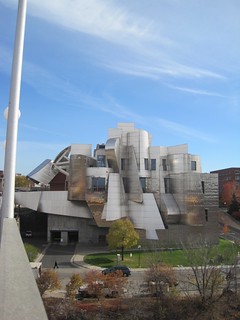
The Frederick R. Weisman Art Museum, depicted above, is located on the bank of the Mississippi river on the campus of the University of Minnesota. It's an impressive piece of architecture by Frank Gehry.

On a brief visit there last week, I was impressed by their collection of works from New Deal art programs, and especially by a painting, "Wheels of Victory" painted in 1944 by American painter Philip Evergood (1901-1973).


The documentation accompanying the painting says "Created in the waning days of World War II, Evergood's painting at first may seem a celebration of American industry." However, the documentation continues, the painting seems "more melancholy than victorious," because it may be making a reference to the labor disputes about African Americans: could they join the railroad union and hold non-menial jobs? "Is the soldier here to remind viewers that African-Americans contributed to America's victory in war overseas but were not allowed to hold good jobs on the railroads at home?"

The white men in the painting do look pretty complacent to me, with their "pocket watches and church papers."

The documentation refers to the black soldier as looking on "despondently." To quote the National Geographic summary of the Black experience in World War II:
"African-American soldiers and civilians fought a two-front battle during World War II. There was the enemy overseas, and also the battle against prejudice at home."
Perhaps this is the subject of this impressive and maybe subversive painting.

Despite the formation of the famous unit of Tuskegee Airmen, most Black soldiers were given only duties like janitorial and kitchen services. "Black soldiers were generally restricted from combat," the article points out. However, "the realities of war would soon blur the lines of race. One major breakthrough came during the Battle of the Bulge, in late 1944.... General Dwight D. Eisenhower, faced with Hitler's advancing army on the Western Front, temporarily desegregated the army, calling for urgent assistance on the front lines. More than 2,000 black soldiers volunteered to fight."

When the black soliders returned home, mostly to homes in the South, they faced a return to the segregated lives and horrendous maltreatment that they had known before the war. Truman desegregated the military, and thus ended open discrimination in job assignments, in 1948, but the Civil Rights struggle  had only begun.

My book club selection for November is The Grace of Silence by Michele Norris of NPR -- a book with a focus on exactly the same topic: the unjust treatment of returning Black soldiers. In this memoir, she concentrates on the experiences of her father. He returned from service to his native Birmingham, Alabama, where Black citizens were still experiencing the worst of the humiliating and dehumanizing features of segregation and racial hatred.

In trying to understand her father after his death, Norris unearthed a part of her family history that no one had ever mentioned and that no one wanted to talk about after more than 60 years. Shortly after his return to Birmingham, he had been shot by a policeman, spent a night in jail (as she said, this was an incredibly dangerous place for a young Black veteran), and had paid a high fine which used up family funds that could have been better used to invest in business. She felt that the experience had been powerful -- too powerful to discuss.

Norris described the struggle of Black veterans to register to vote in Birmingham soon after the war, and the decision of her father and some of his brothers to move north, and his purchase of a  home in a white neighborhood. She was born in Minneapolis (not that far from the museum where I saw the painting), and her own experiences, which are briefly discussed in her memoir, are quite different from those of her father.

I've recently seen a lot of connections to the topic of Blacks in World War II and their experience when coming home. Earlier this month, my book club read Mudbound, which includes a fictionalized (and I would say, sensationalized) account of a returning Black Southern veteran. Also, not long ago at the Civil Rights exhibit in the Henry Ford museum, I saw the restored bus where Rosa Parks performed her famous historic refusal to sit in back. The connection of this to the struggle of veterans to the struggle for Civil Rights is interesting -- as the National Geographic article says "Not only had the war opened a new window of opportunity for blacks, a number of the civil rights leaders of the 1950s and '60s, including Medger Evers, had been trained in the Army, where they acquired leadership and organizational experience."

Friday, October 26, 2012

The Children’s Book by A.S.Byatt


The real center of The Children’s Book is life at the end of the Victorian era – which sounds like too big a topic for a novel, but somehow Byatt pulls it off. She talks about how family life at the end of the 19th century was special with an independent life for children in an upper class family, who were often numerous and left to themselves to wander in the woods or explore the country-house environment where they were being raised. She makes up five families, with many children, in which to explore her idea.

The world of children and families in the late Victorian era is a powerful topic. The contrast between wealth and poverty and the contrast between the rights and possibilities for men and women in Victorian society affects each of the families in the story.  Every character struggles with his or her social and gender-caused position and its limits. Several characters rise in status, especially Olive and Violet, a coal miner's daughters, but privileged members of the upper middle class as adults. Olive is the matriarch of the novel’s most central family and a successful author, and her sister Violet is the quiet unmarried aunt (but things are not quite as they seem).

As they mature, the children of the five families develop a variety of literary, social, artistic, and political consciousness. They are influenced directly and indirectly by famous people who lived then – the Fabians, suffragists, anarchists, socialists, even Emma Goldman, cultural leaders like Rudyard Kipling, G.B.Shaw, and William Morris. The characters attend lectures in London, Cambridge, Oxford; join real socialists and other activists, and travel to witness conditions in other countries. They put on plays – especially Shakespeare plays – which seem to them iconic, and whose organization gives them experience of various sorts. (Also, it’s a typical thing for that era’s family to do.)

The novel is full of real places and things, all made very vivid. The father of one of the major families is a department head at the emerging Victoria and Albert Museum in London – the museum is both physically and conceptually central. A number of the characters gather for a visit to the Paris World’s Fair, where they see Loie Fuller dance among other things. The women in the novel dress up for dances and theatrical performances – the descriptions of gowns and hats are lush and indulgent.

A counter topic to family and social life is the life of artists. There are at least three characters who have enormous creative gifts: Benedict Fludd a very troubled and eccentric ceramicist; his apprentice Phillip Warren, born very poor and lower class but driven to create from his childhood; and already-mentioned Olive Wellwood, a writer of  fantastic tales encompassing the title’s “Children’s Book.”

The beauty of ceramic vessels – shape, color of glaze, decorative elements, workmanship – and the details of the potter's craft are described with love and attention to visual and tactile detail. Byatt makes a great effort in explaining the many challenges in creating a pot on the wheel, mixing a glaze, loading a kiln, and firing the contents. The characters appreciate the beauty of pots and are aware of the history of earlier ceramicists.

The process of writing – creating imaginary worlds, myth and fiction, setting up characters, choosing words – and the effect of writing on an audience are another fundamental theme. Olive’s tales begin as specific gifts to each of her children, in some cases with a problematic effect. They continue to become a way that she earns a living for the family – which also causes a variety of problems for herself and her complicated relationship with her husband.

Several of the characters struggle with understanding their identity, which is often vexed by the complex relationships of their parents and those who seem to be their parents. Some of the most mistreated characters develop stong identities anyway; some of the most loved fail. Byatt manages to subsume the identity question in other themes, mentioning often the emerging medical specialty of psychoanalysis and creating at least two very troubled suicides who don’t get any help in this respect.

The narrator often steps back and describes historic events and their social consequences. Nothing is explicit, but no reader could be unaware of the coming fate of the families whose youth are contemporaries, as often mentioned, of Rupert Brooke. He is often present at meetings or informal events that the fictitious characters also attend – we know what that portends. Byatt is aware that her readers must be thinking of the First World War and what it will do to her characters, and she’s ruthless in her final chapters, when it happens.

I loved this book. I was amazed that with so many characters and so much going on, Byatt always kept me on top of the family place of each character as he or she was mentioned. The graphic horrors of the Great War were kept at bay by the long history of the characters and their aspirations; the inevitablilty was handled wonderfully. 

Tuesday, September 25, 2012

Decluttering for no special reason


declutter1196

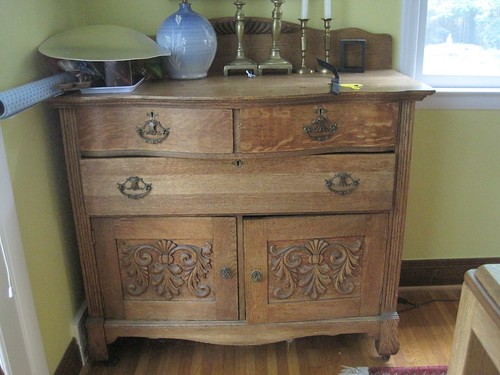
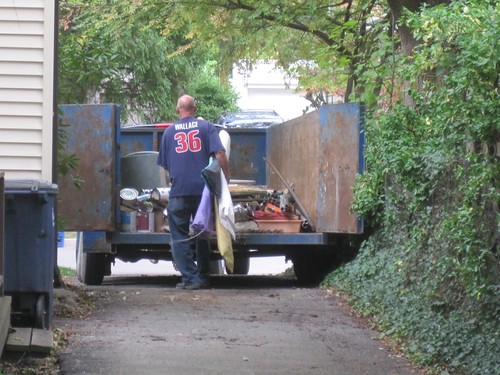
Our old sideboard gave us good service, but it was time for it to go: we bought a new one with a big hutch a few years ago, and shoved it into a corner. Last weekend, I cleared all the stuff out of it (some is visible on top in the photo, waiting for my new plastic box for attic storage of holiday items).

I shopped it around to friends -- no takers. Today, the PTO thrift shop, which is a combined fund-raiser for all the PTOs in town, set the truck for it. They also took a box of glassware and other items that didn't make the cut to be rescued. The tablecloths that were in the middle drawer replaced photo albums in the newer sideboard, while the albums found a home in my desk upstairs, which was also new last year. A couple of bottles of cognac and liqueur are now in the pantry.

Everything seems to start a cascade of rearrangements and give-aways, but somehow it's done.

declutter1199

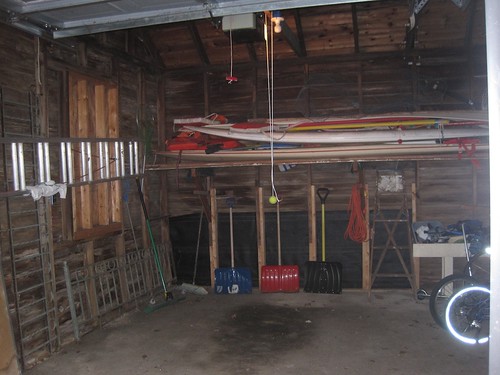
Our garage has accommodated our unused ancient windsurfers since we gave up our lakeside cottage in 1999. Maybe I shouldn't admit that. This stuff is so obsolete no one wants it.

As of this afternoon, the windsurfers are gone. I hired a trash hauler to come during the same time-window as the PTO truck, so we only had to wait once. The windsurfers' sails were occupying space in the basement -- they are now also gone. The old porch railings (leaning against the garage wall at left) are gone. A lot of unwieldy styrofoam is gone. Two old counter tops are gone -- we never found a way to use them. Len was delighted because the old paint cans are also gone from the basement. The trash hauler/truck driver says "I'm stronger than you think," and that's really true; he carried away some really heavy stuff.

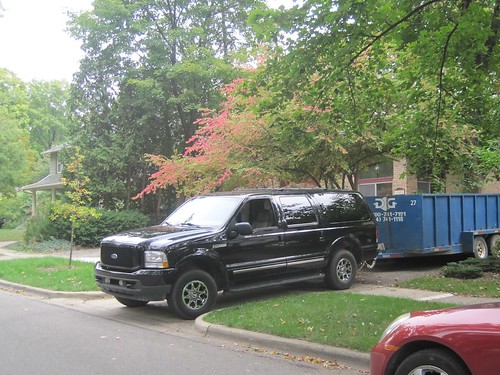
Here's the truck. Besides being strong, the driver can miraculously back into a driveway as narrow as ours:

declutter1209

The sails on their way into the trash truck (paint cans visible to the left) --

declutter1204


Oh! This feels good! Stuff has such a way of insinuating itself into one's life. Decluttering is great.

Sunday, September 09, 2012

Old Cars

cars 3

cars 1

cars 2

camping 2

camping 1

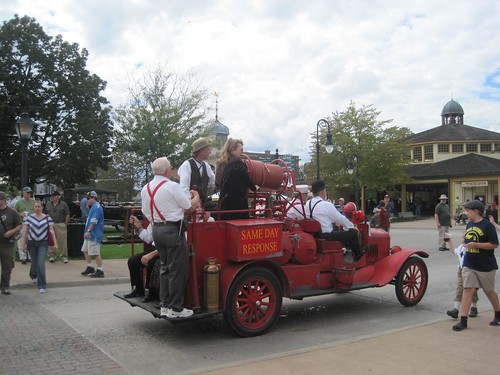
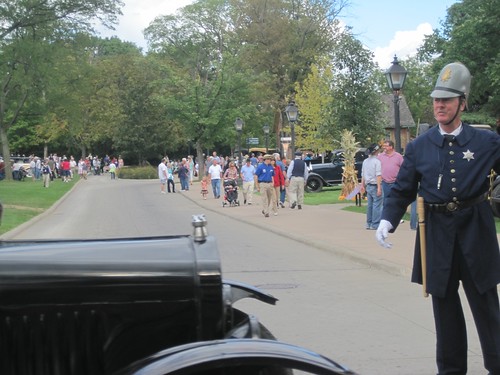
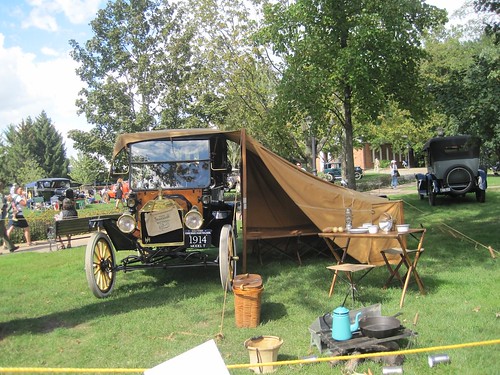
The Old Car Festival at Greenfield Village provides a chance to see the amazing labors of many old-car hobbyists. Some preserve old cars in their original condition; others restore the cars to shiny newness. Some dress up in the apparel of the same vintage of the cars, starting around the turn of the 20th century, and going just past 1930, I think. Some collect old equipment, such as fire trucks or camping vehicles and gear for old-style camping. I wrote on my food blog about the collector who displayed a cooking box that fit onto a Model T exhaust manifold. Quite a show!

Monday, August 20, 2012

Encounters with Philosophy in Novels

Frankly, I am not very interested in philosophy. It's too abstract for me. I can't even bear the philosophy blog in the New York Times, (The Stone: "a forum for contemporary philosophers on issues both timely and timeless") which I think is intended optimistically for those who are as challenged as I am by abstractions.

However, by some chance and a library visit, I recently read several novels with philosophy integrated more or less into the narrative. In the most simple-minded view, each of these novels explores a philosophical problem through both the actions and the conversations of the characters. I was very interested in how the authors handled abstract ideas and integrated them into the plots, and in the similarities between these highly different novels.


After Many a Summer Dies the Swan by Aldous Huxley (published 1939) is concerned with the finality of death and by extension what the idea of death does to those who obsess about it. The book includes both satirical and semi-serious themes, so it's a bit hard to discuss. One central character is a Los Angeles real estate millionaire (that's a lot of money in 1939), who despite ownership of a highly profitable Forest-Lawn-type cemetery is terrified by death. Using his vast wealth, he hires a scientist to find him a cure for mortality, and also hires a typical English scholar to go over some papers he's obtained that might record an earlier attempt at immortality. In addition to these men, there's a beautiful 22 year old bimbo (not called that) who tries to make him feel young while enjoying the luxury he offers her. It's a very male book.

The scholar, the scientist, and another convenient scholar in the neighborhood have endless discussions about philosophy of death. Alas, the conversations are not satire. I found it tempting to skip the philosophy and just enjoy the comic parts. Sometimes Huxley takes the scholars more seriously than other times; unfortunately not a single one of the characters is in my opinion at all sympathetic. This is a flaw in the book if you ask me.

Before philosophic discussions bored me to death, I felt that the plot took off, so I read the whole thing without flagging. At the end the scientist and the rich man travel to England where World War II is breaking out, though I couldn't figure out its relevance. Philosophical discussions are abandoned as they find that the centuries-prior experimentation with a cure for aging had made two people immortal; however, it also turned them into a sort of apes. So what they searched wasn't in fact exactly what they wanted -- except the foolish rich man, who is sent-up one more time by saying the ape-like existence didn't look that bad. The ending makes the philosophy seem even more tacked-on than it did during the novel.

Conclusion: this particular novel is not very successful as a philosophic platform.

State of Wonder by Ann Patchett (2011) focuses on scientists searching in the Amazon for a drug that will make women fertile for their entire lives. They are studying a tribe whose tree-bark-eating habits have this effect. The scientists have a lab in the jungle and are experimenting with turning the bark into a marketable drug for the pharmaceutical company that pays their way. The central character visits the lab (with great difficulty) because she is searching for a colleague who has died; the plot centers around how she learns from her experience -- to put it bluntly and oversimplify.

Patchett incorporates a number of philosophic ideas into the novel, but rather than conversations, these ideas come up as the characters' moral dilemmas. The scientists in the jungle constantly have to deal with questions about the value of what they do, and about their responsibility for interactions with the tribe they are living with. Should they introduce Western medical treatments and antibiotics when their hosts are ill or injured? Should they communicate other Western ideas? Share their canned and processed food? Learn the local languages? Each dilemma comes out of a carefully-presented situation, and the characters have strong ideas on what is ethical and moral.

Finally, the characters have to face the most fundamental question: would it even be ethical to enable women to bear children all their lives? The way this dilemma arises is the most adroitly written part of the book. Again, what they are looking for doesn't quite turn out to be what they really want. These are highly sympathetic and beautifully realized characters, and the plot is complex. I wouldn't have skipped a word.

Conclusion: this novel beautifully embodies ideas and what I would call philosophy along with character development and suspenseful events. Especially wonderfully, it contains one extremely well-presented and memorable character, an elderly woman doctor who is leading the jungle experimental station.

He, She, and It by Marge Piercy (1992) is science fiction set in 2059, in a post-nuclear distopian world. The scientists in this world are computer and robotics experts who have created a golem; that is, a machine that can think, feel, and possibly act with free will, and who successfully mimics humans physically, mentally, and emotionally. The main story of the novel is about the creation and development of this creature, his role in the characters' struggle with their enemies, and about the terrible world that has emerged from human errors of the past.

The events of 2059 are interspersed with the story of the original Golem of Prague, told with wonderful imagined details by one of the characters in the book. Plot and characters in both story lines are developed in a way I find compelling, though I don't feel like writing a summary here.

In my view, the increasing parallelism between the two golem stories as they unfold is one of the most enjoyable features of the book. Both stories end up asking the same question, a moral question embodied in both: is it right to make a creature that is aware of itself yet created to serve its creators? The interrelated stories also ask about the dangers of such a creature to its creators. And again, as in the other books, the modern scientists/medieval kabbalists got what they were striving for, but learned that it was not truly what they wanted.

Conclusion: like State of Wonder, plot and characters in this novel beautifully embody the ideas and questions that it explores. I'm impressed by the successful embedding of the older tale in the sci-fi like future story.

The Marriage Plot by Jeffrey Eugenides (2012) isn't so much about any philosophical ideas as about late adolescents who drop the names of modern philosophers. It's beyond pretentious. Maybe there could be a book about name-dropping that doesn't suffer from too much name-dropping, but this isn't it. Eugenides constantly seems to be trying to demonstrate his bona-fides as a knowledgeable reader of deconstruction, not just writing a novel. I've only read around 100 pages and I'm fed up.

Would I like it better if the adolescent characters discussed (or even thought about) the ideas in their college philosophy classes? Doubtful. Am I just unable to cope with a book about young people? Well, I do like Jane Austen a lot. And the Harry Potter books. And even sort of liked The Hunger Games. And many others. In fact, I really liked Eugenides' earlier book, Middlesex, about a very young central character. I'm not guilty of wanting everyone to be old.

I can't believe the number of people I've read of or talked to who have started but not finished this book, and I might have joined them. It's really, alas, a tedious read, and I can't make myself care if the characters want something or not, much less to find out if they get it as in the other books. If I go back to reading the book, I will append something here.

Friday, August 17, 2012

African World Festival, Detroit


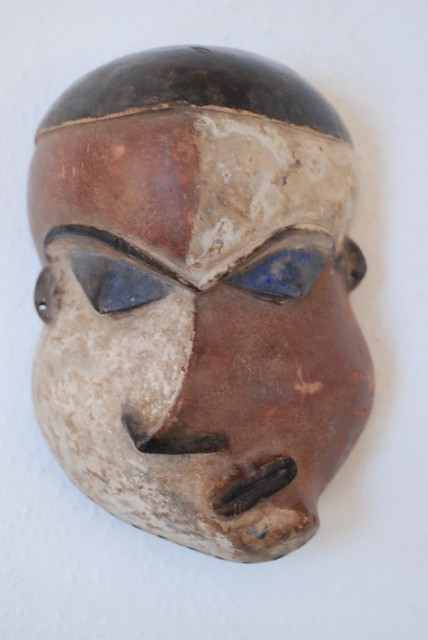
masks0055
Our new African Mask: A "Sickness Mask"from the Congo

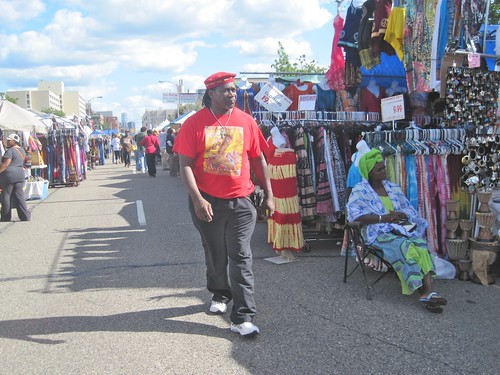
This afternoon we walked around the sales booths for the African World Festival, sponsored by the Detroit Museum of African American History. The festival will present a number of events tomorrow, but we just happened to be there today. We went to Detroit to see an exhibit of five Spanish paintings by Velazquez, Picasso, Dali, ElGreco, and Goya at the Detroit Institute of Arts across the street.

The festival was quiet, but very colorful. I'm sure it will become much more crowded as the weekend progresses, and I'm glad we were there at a calm time.

africaworld1052

africaworld1048


africaworld1049

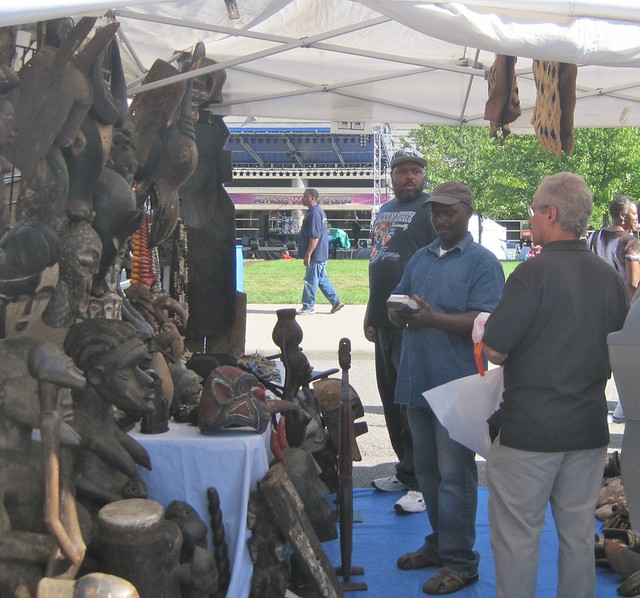
Several of the many booths offered a wide selection of African masks and other traditional wood carvings, both antique and modern. We bought our new mask from Billo Berete of Newark, N.J. -- below, Len in the booth:

masks1066

masks1056

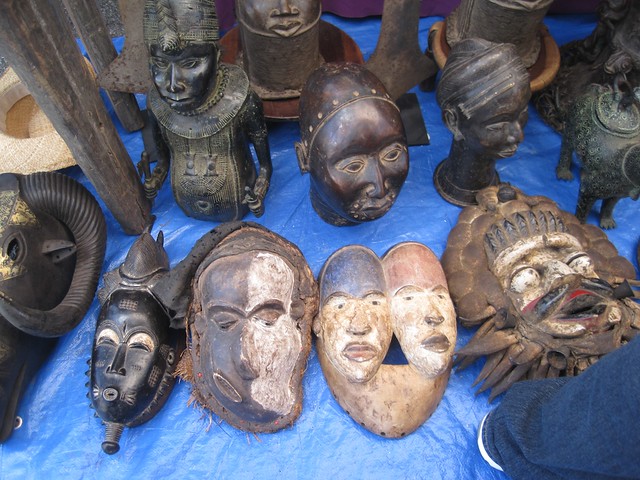
There were many other masks in this booth, including two more Sickness Masks, as shown above. As I understand it, sickness masks are characterized by asymmetry, contrasting colors on opposite sides of the face or double faces, and sometimes by anguished looks. The mask at left in the middle was an extremely wonderful piece, made not only of wood but also mud, seeds, and cloth. It's probably more authentic than the one we bought, but it was too vivid for my taste. It made me anxious!


For more information on Sickness Masks, including images, see the second half of my July, 2009, post "Why do I like African Masks?"


Tuesday, August 14, 2012

Mona Lisa Suddenly Appears in Google+


Today's Mona Lisa -- a leaf carved with her image. See this:
 YouTube: Did You Know :Leaf Carving China Slide Show

Monday, August 13, 2012

New Mona Lisa Objects


My collection grows rather slowly these days, but here are a few new items. The cards were for my birthday recently, as was also the promotion for a picture framing shop in Vermont. The mona lisa mints are from the Santa Barbara art museum, where I also bought another object but I'm still working on an effective photo of it.

Sunday, August 05, 2012

Mountains

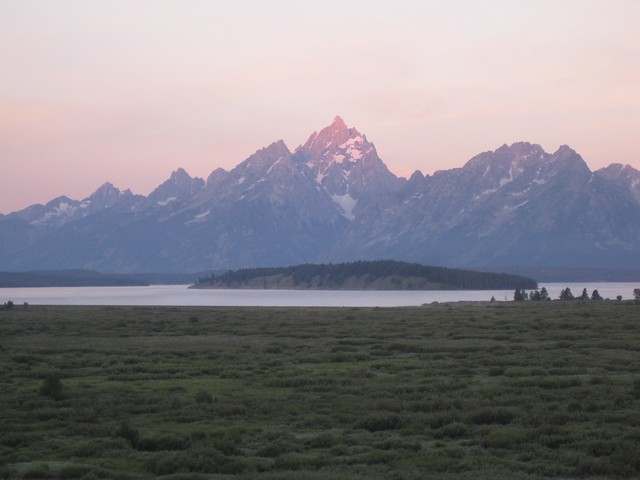
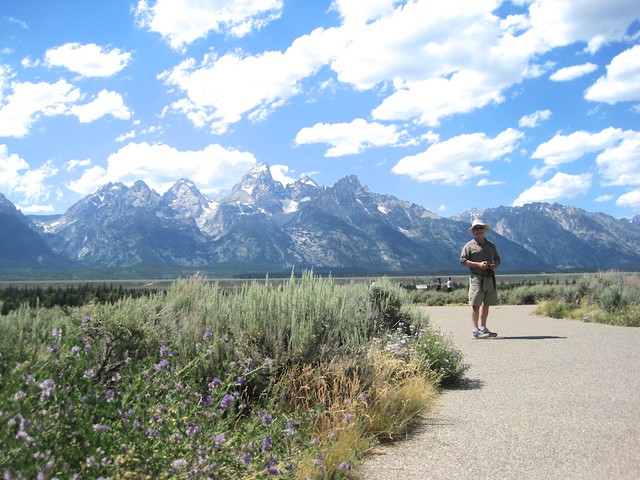
The Tetons impress me more than any other mountains I have seen. The wide meadows and reflecting lakes at the foot of the mountain range provide scenic views of power and beauty.

mountain0988
Grand Teton mountain lit by the first rays of the rising sun. It's the tallest of the peaks, so the sunlight reaches it first.

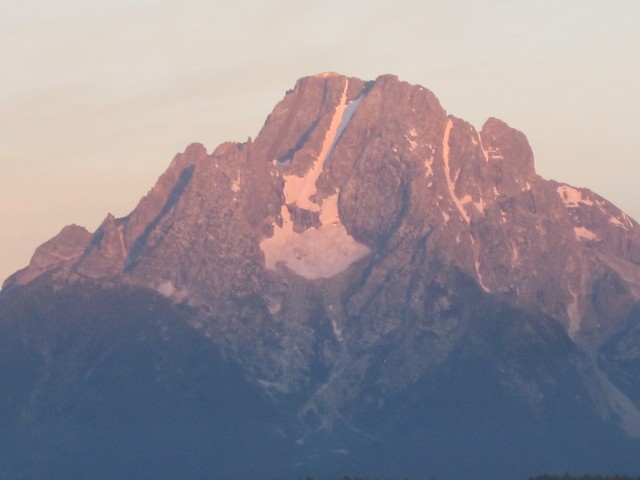
mountain1002
More early morning sunlight on the mountains.

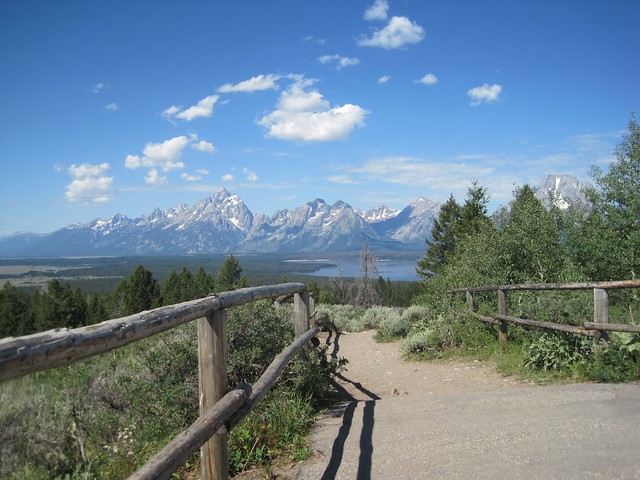
mountain0930
The Tetons and Jackson Lake, seen from Signal Hill. This is high above the plain with panoramic views of the horizon in all directions. The road winds around Signal Hill several times as you ascend. The last part is a bit hair-raising, as it goes across a little spine. I don't know what signals they used when they chose the name, but obviously now, there's a huge cell-phone tower near the top.

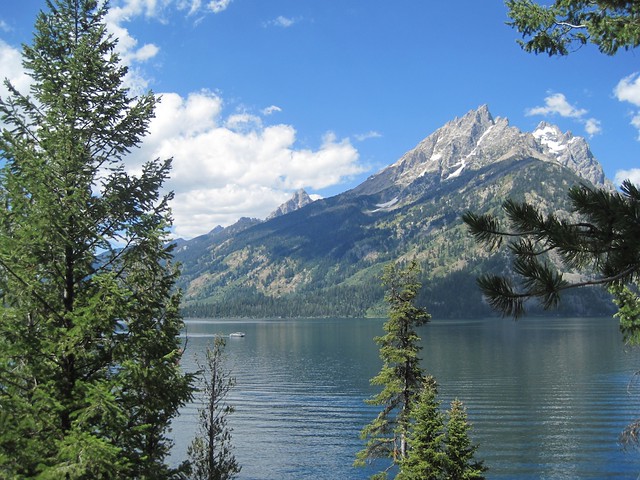
mountain0940
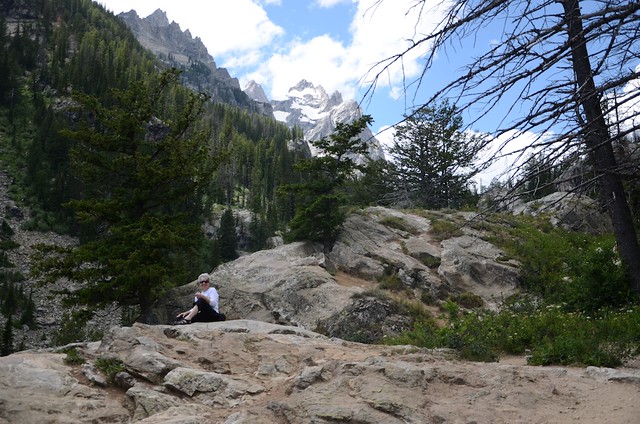
View across Jenny Lake. After stopping at this viewpoint, we drove to the visitor center and took a boat across the lake to a hiking trail.

mountain4442
From the hiking trail, we saw the mountains from a number of perspectives, one more beautiful than the next!

mountain0974
View from a turnout along the road.

mountain4094
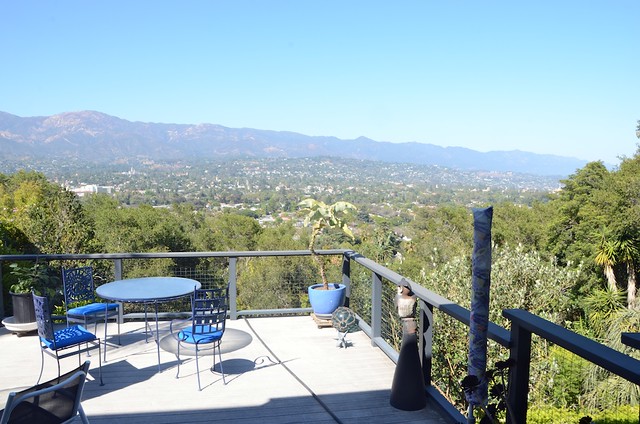
We also enjoyed our view of the California coastal mountains from our Santa Barbara apartment. This shows our deck.

mountain4197
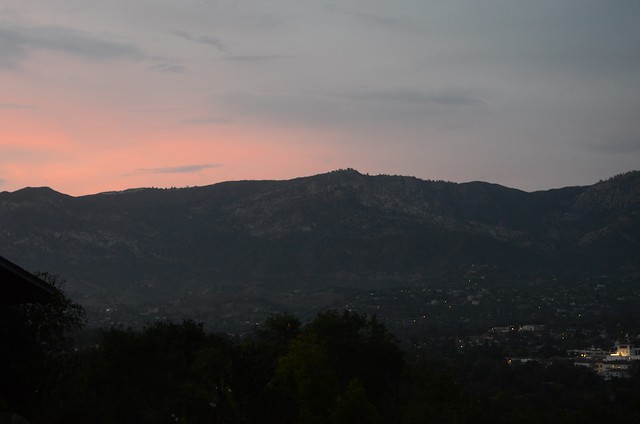
Santa Barbara view at sunset.


Saturday, August 04, 2012

Columnar Basalt at Yellowstone

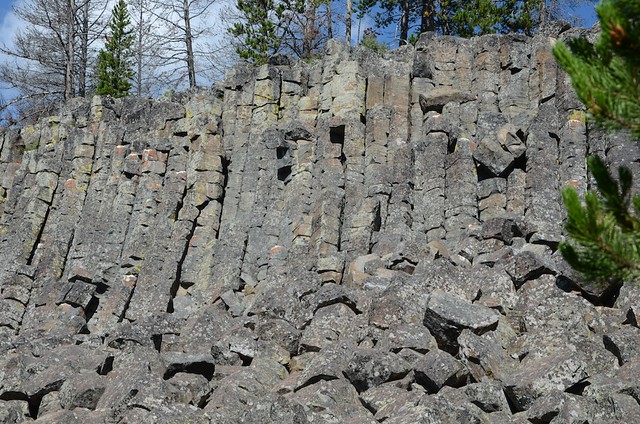
Yellowstone is full of volcanic features, including this columnar basalt at Sheepeater Cliff (named for Shoshone Indians who raised bighorn sheep and who sometimes used this area). The columns formed during the cataclysmic volcanic activity of around half a million years ago, which created many of the distinctive features of the park. Yellowstone has several such basalt formations.

basalt4388

Marmots live among the columns:

basalt4387

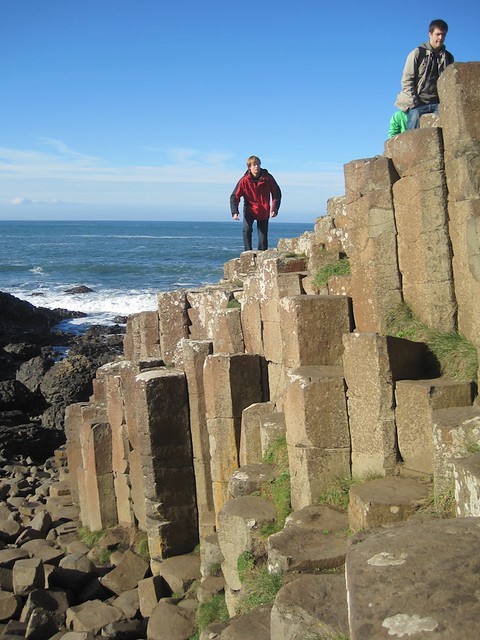
Columnar basalt is extremely fascinating -- we saw perhaps the most spectacular example a couple of years ago at the Giant's Causeway in Ireland, where the tops of the columns form what appears to be a tiled pavement made by giants:

giants5237

Thursday, August 02, 2012

Geysers

thermal0890

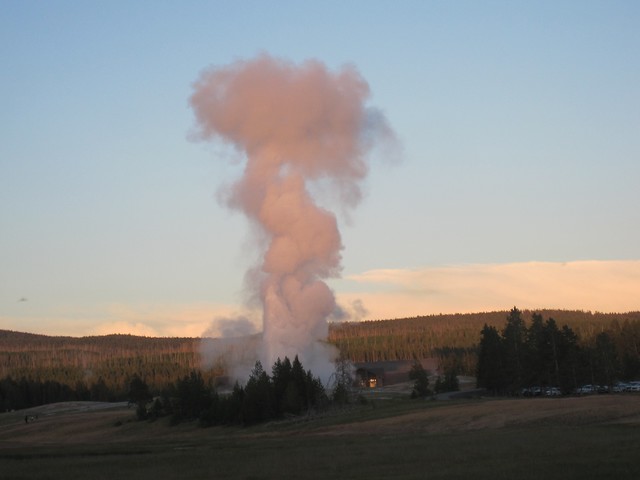
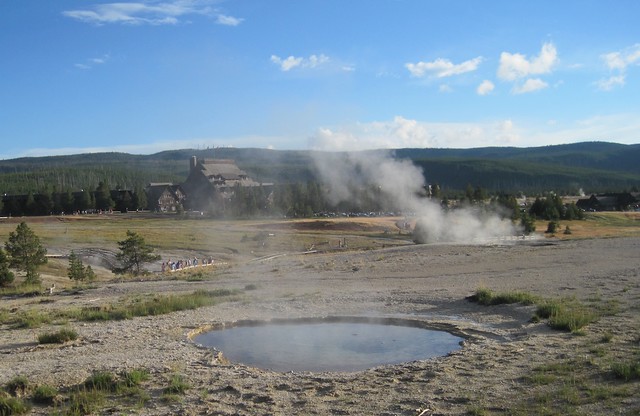
The main event at Yellowstone is geyser eruptions. Old Faithful is of course best known, as it's large and has a schedule almost like clockwork. We watched 5 eruptions in the three days we were in the park, the last being at sunset as we returned from a walk around the Old Faithful Geyser Basin. The setting sun was turning the steam clouds a beautiful shade of pink.


thermal4338

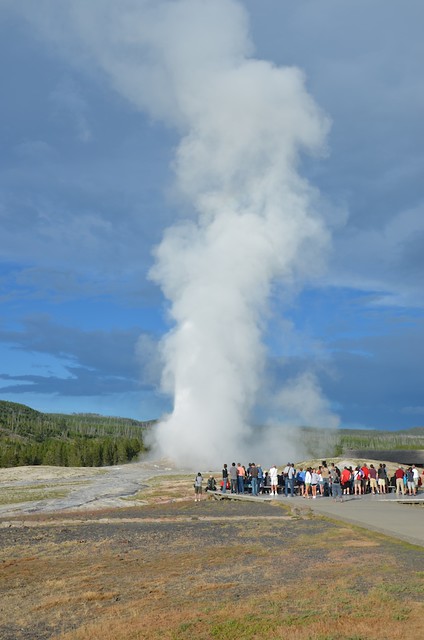
Old Faithful attracts a crowd at almost every eruption; private cars, group vehicles, and tour buses pour into the parking lot shortly before the expected moment. I found it interesting that the famously predictable schedule has slowly changed during the approximately 100 years  of the park's existence. Now 90 minutes, in the early days it was closer to an hour between eruptions.

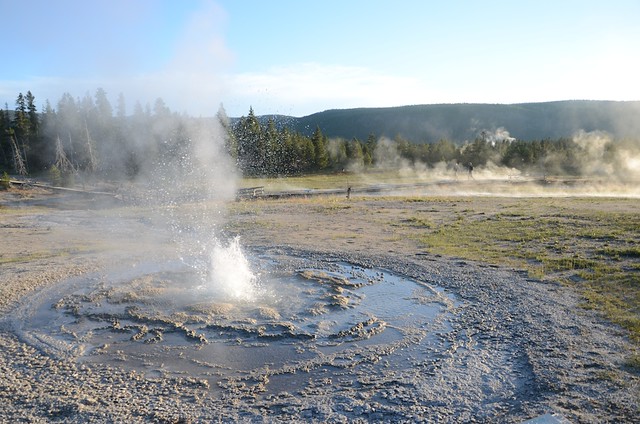
The Old Faithful Geyser Basin is the largest grouping of geysers in the world. Some erupt from little pools; others have formed cones or irregular shapes as a result of the accumulated mineral deposits. The basin also includes a number of springs and pools, a boiling pool with steam bubbles seething at the surface, and beautiful surrounding woods and streams.

Across the river and the fields, the historic Old Faithful Inn, which opened in 1904, has become a feature of the landscape as well. (We stayed there, but weren't really that happy about it, as our room was neither historic nor well-maintained -- it was in a mid-20th-century cheap addition. Peeling paint and rotten plaster? No chairs to sit on? Please! But I digress. Our other night near Old Faithful was at Snow Lodge, which met all our expectations, and lived up to our experiences in other historic buildings in national parks.)

thermal0847
Old Faithful Inn from the Geyser Basin

thermal4353

thermal4345

Geysers vary enormously, from tiny ones (as above) up to the erratic Steamboat Geyser with a steam jet as high as 380 feet. Steamboat, around 30 minutes drive from Old Faithful in the Norris Geyser Basin, was active for a few years beginning in around 2000: its last big eruption was in May, 2005. When we walked there, it was emitting a small but still impressive series of steam puffs.

thermal4373
Steamboat Geyser as we saw it.

I found that each thermal basin has its own interesting look and characteristics. Norris, which is larger and has the thermal features more spread out, seemed especially barren. The high acidity of the springs that well up, erupt, and bubble through the landscape kill trees and plants. Within the basin, however, I noticed one small patch of grassy vegetation covered with steamy condensation that glistened in the sunlight. I didn't succeed in capturing its fairy-land-like look in a photo.