Saturday, April 30, 2011

Plants and Stones: The Petrified Forest

A plant can grow to look like a stone. The desert is slightly spring green today with tiny somewhat camouflaged plants as well as the showier flowering ones among the rocks:

petrified6050

petrified6036

Trees can turn to stone, or once they did so. The back story: once there was a tropical forest full of huge trees and dinosaurs. The trees fell, and were covered by silt, or maybe a volcano or two erupted and covered the broken forest. Eventually, the trees all turned to stone and sparkling, colorful minerals replaced their organic elements.

petrified6060

Around 250,000,000 years later, humans have evolved. Early Indian tribes found the petrified trees, which had by then been delivered to North America by continental drift. At least two groups built pueblos in the area, and left petroglyphs on the rocks that as yet have no translation.

petrified6017

petrified6014

petrified6010

A few centuries later, humans discovered what they could do with mineral resources, invented the steam engine, and began looking for places to put railroads. The explorers and rail planners found the stone trees. Once the railroads were built, a whole industry grew up near the forest, ready to grind up the petrified wood and process it into many things. The railroad shipped tons of petrified rock out of the West, and brought tourists to see the natural wonders that seemed inexhaustible. Also, the beautiful agates, geodes, and other sparkling crystals that sparkle mysteriously in the ancient tree trunks were in time all pried out of the petrified wood and taken away.

By the time the Petrified Forest National Park was founded a century ago, it was almost too late, and the looting didn't stop. What's left of the petrified wood is beautiful and fascinating, but a little sad, especially the area called the Crystal Forest where all the sparkle is gone.

petrified6053

The landscape itself is still utterly beautiful.

petrified6004

And the older park buildings have a lot of their early-20th-century charm.

petrified5992

We had a lovely day in the park, while driving from Albuquerque to Flagstaff.

Thursday, April 28, 2011

Oklahoma from a moving car

Today we drove from Oklahoma City to Albuquerque -- definitely a scenic route in a southwestern way. Western Oklahoma has ranches, cattle, oil wells, wind farms, and bales of hay. The Texas Panhandle is vast, flat, almost vacant. Eastern New Mexico has deep arroyos with exposed red rock sides, as one is climbing all the time to get to the high plane. At one point we could briefly spot some snow-topped mountains, but never caught sight of them again.

Scenes along the way driving through Oklahoma:

okla5943

okla5940

okla5936

okla5934

okla5931

Tuesday, April 26, 2011

Shaw's Garden

The weather wizards relented! We had all the sunshine we could imagine at the Missouri Botanical Garden (Shaw's Garden).
shaw5821

In front of the Climatron, statues by Carl Milles, whose fountains I have always liked. I think prototypes for some of these are at Cranbrook near Carol's house.

shaw5808

Some of the Garden's collected works in glass by Dale Chihuly.

shaw5859
Ruby with Henry Shaw, founder of the gardens.

shaw5872
High school art class from nearby school.

shaw5895
I found the Japanese gardens amazingly beautiful!

Several more photos are on Flickr including:

shaw5823 shaw5863 shaw5886 shaw5892 shaw5870

Dark Cloud over St.Louis

We made it from West Lafayette to St.Louis yesterday around 1:30 PM. At first we drove through a pleasant spring rain, enjoying greening fields and a few wide, vivid expanses of new clover the same color as the blooming redbud trees. As we approached the junction just before St.Louis we saw a dark and threatening cloud over the city. Are evil weather wizards angry with this city? The international news was already featuring the severe tornado that filled the airport with glass, rain, and stranded passengers last Friday!

We began fulfilling the purpose of the trip in the afternoon, visiting Len's 2 sisters, 2 brothers-in-law, 4 nieces & 2 nephews (counting spouses), and several of their children. Some by lucky coincidence were also visiting here.

Sunny today? I don't think so.

Sunday, April 24, 2011

Pelicans in West Lafayette


White pelicans have strayed from their usual migration route to the west of here and are now hanging out at the Celery Bog near Elaine and Larry's house. We saw them circling in the sky, and also sitting on this rock in the pond.

The wooded areas were carpeted with little white flowers, the frogs in the bog were singing loudly, and we also saw a very tiny turtle basking on the painted strip that divides the lanes of the bike path. Many other birds were flying and swimming, including this one:


Photos by Lenny.

Saturday, April 09, 2011

Silly Silly Silly

Irish connection for Mona Lisa? See: Leonardo DaVinci’s ‘Mona Lisa’ - the Irish connection by Cathy Hayes.
"Dominus Otho Gherardini ... travelled to Normandy with a caravan of Norman knights in 1056. ... Otho was a member of the Florentine family, the Gherardini. He came to the court of King Edward the Confessor in about 1056, ten years before the Norman Conquest of England. He then joined the invasion of England. After the Battle of Hastings he was given land in England. His son Walter FitzOther is mentioned in the Domesday book in 1086. About a century later his Norman descendants settled in Ireland. They were known as the Fitzgeralds."
Yeah, right. Mona Lisa had Irish cousins.

Tuesday, April 05, 2011

Still More Silly Research on Mona Lisa!

Again in Italy the so-called researcher Silvano Vinceti has people jumping at his crazed suggestions. This time, he has convinced Italian authorities to dig up bones in a convent in Florence to see if they can find the real Mona Lisa. He says she's buried there.

In December his "discovery" was that Mona Lisa's eyes have "tiny letters" depicted in them -- see this article in the Washington Post: Mona Lisa's eyes reveal some secrets. See: More Silly Research on Mona Lisa

He must be an incredible con man!

Sunday, April 03, 2011

Bubbles


Soap film finds the surface with the least area.

Saturday, March 19, 2011

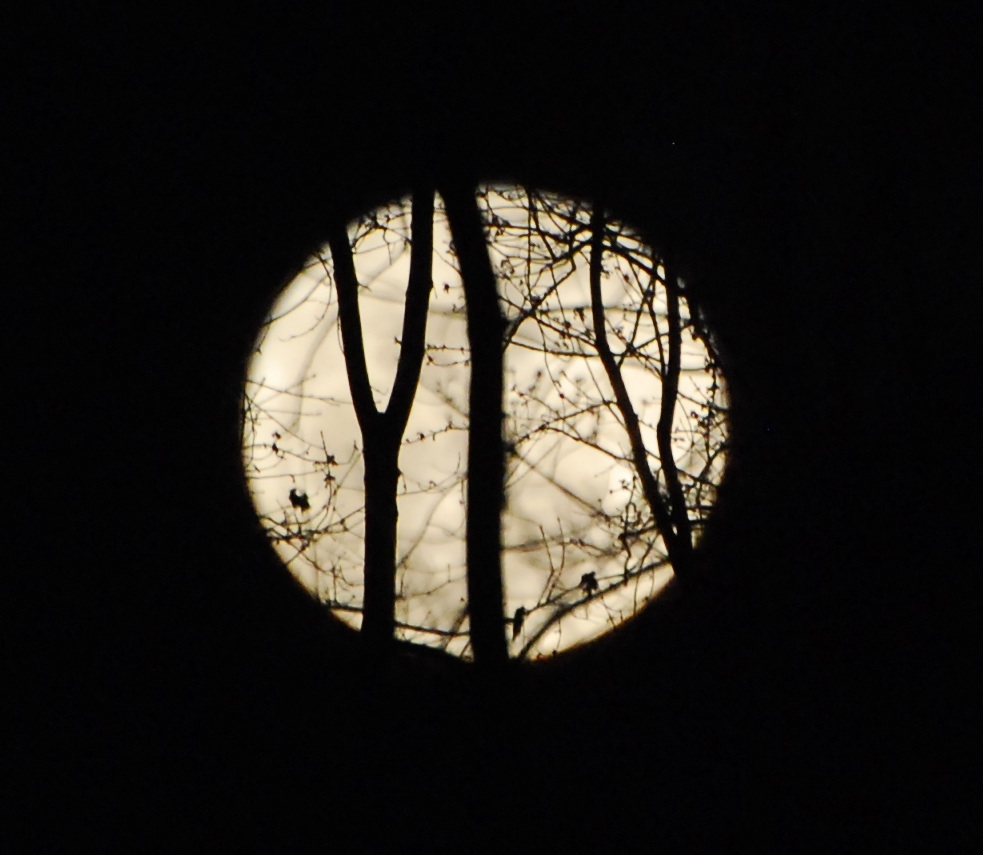
Super Moon

Tonight's full moon looks larger than normal because the moon is at its closest to earth. We saw it from Evelyn and Tom's house nearly an hour after official moonrise.

Wednesday, March 16, 2011

Happy Saint Patrick's Day

hdr_ireland 3

Our trip to Ireland was fabulous. We found that both art and nature support the popular expectation we've had for Irish imagery. This will be my last post on Ireland, as we've now been back for over a week.

Thus Len's HDR photo of an old cloister at Coing Abbey (above) illustrates the deep green foliage one might associate with Irish landscapes, along with beautiful medieval arches. And the modern water meter to the right also uses a Celtic knot design.

We find the Irish to be welcoming and extraordinarily friendly. Arny and Tracy's friends, people in shops and on the street, museum attendants, Bed and Breakfast and restaurant personnel, airport staff (yes, even security) -- all made us feel welcome. We were a bit startled to find all the usual Irish stuff like magnets and shirts that say "Kiss me, I'm Irish," toy leprechauns, and other cliched things that I thought were just for St.Patrick's day in the US!

So have a wonderful St.Patrick's Day. I think that the bars in Ireland will also be totally busy tomorrow, just like the bars over here. And I hope all the days are sunny -- though the photo below of the Claddagh in Galway illustrates that we also saw a bit of Irish mist from time to time.

hdr_ireland 17

Saturday, March 12, 2011

Irish Nostalgia

Last night we went to see Martin McDonagh’s play, The Cripple of Inishmaan, performed by the Irish Druid and Atlantic Theater Company. The sponsor was University Musical Society, which presents music and drama at various venues here in Ann Arbor -- it's a coincidence that they put on an Irish play that's so timely for me. When an ad came in the mail, I couldn't resist; we went with our friends Bob and Elaine, who are theater lovers.

The action of the play takes place on Inishmaan, one of the Aran Islands just off Galway -- last week, on clear days, we could see this group of islands on the horizon from the Cliffs of Moher where we took a walk (photo of Lenny on the cliffs right/above; islands vaguely behind him).

The characters in the play are colorful and a bit of a cliche -- two oldish women, a gossipy old man and his very very old mother (who drinks poteen), a none-too-virtuous girl, her brother, and the title role, a crippled boy. The performance was what I would call theatrical: very stylized acting, sort of proclaimed. I enjoyed it, but it was unfamiliar: totally different from watching a movie. Of course the characters all speak in a strong Irish accent, which underscores the folksy, retro quality of the plot and the dialogue. Like many tales of common people, comedy and tragedy combine in the course of the play; what Sholem Aleichem called laughter through tears.

The experience of this play seemed very consistent with an article I recently read in the Guardian titled IRISH EXCEPTIONALISM. It asked why the recent dramatic economic boom and bust seems to have had little impact on Irish fiction -- after looking at recent Irish plays, songs, art exhibits, etc, the Guardian author seems to find only that YouTube is "dripping with home-made 'bail-out songs.'"

And, says the author, recent events resemble a fictional production, maybe a good play:
"The cast of characters is superlative, featuring buccaneering bankers, outsized politicians and all-conquering property developers .... Even the locations are enticing, from rural beauty spots blighted by "ghost estates" to high-end networking jamborees masquerading as racing events."

"You'd expect this sorry tale to have generated a wave of films, plays and novels. After all, the Irish have never shied away from telling stories about themselves. Visual artists must have hit upon a new mode of expression. Musicians, surely, would have found a way to express the story through song, as they have done with so many of Ireland's historical traumas. Hell, this story could make an opera."

However, the Irish continue to write about their past, rather than their present and future, says this thoughtful article. One conclusion: "many of us hold tight to outdated notions of Ireland as a romantic sort of place that only the artist can really understand." Though I liked McDonagh’s Cripple of Inishmaan last night, I think this statement sums it up.

Note: I also liked the review of the play in the local online newspaper.

Friday, March 11, 2011

Irish Sheep

sheep5110

Irish woolens are still being made -- we saw beautiful scarves and thows for sale, but had lots of sales resistance. We also saw the sheep, which still had their large fleece winter coats on. The sheep in the field above are grazing under Ben Bulben, the mountain made famous in several of Yeats's poems.

sheep5113

sheep5626

Thursday, March 10, 2011

Where do Irish Fairies Live?

The landscape in Ireland is full of ancient stones. Old towers and seaside fortifications from the Middle Ages. Early Christian churches, holy wells, and abbeys with a few standing arches from once-secluded cloisters. Stone walls from all eras dividing the land into sheep pens. Ruined castles from many different centuries. The giant Finn McCool's causeway. And neolithic tombs, forts, and other constructions.

My perspective in seeing all these bare stones on my three trips to Ireland has always been historical: I try to learn about the eras when many races and tribes came to Ireland and built new lives and new stone structures. I envisioned how these peoples cut down the ancient forests and turned them into bogs and stony fields. I read about centuries of fighting, famine, colonization, and other events affected the landscape.

But how did the Irish farmers two centuries ago view all this evidence showing centuries of human occupation? They had little historic information, and less understanding of how ancient the neolithic tombs and forts were created. The mysteries of their surroundings created a sense of enchantment. Irish folk tales invented Finn McCool to create the giant's causeway, and imagined races of fairies, wee people, leprechauns (who are originally shoe makers), banshees, and many others to populate these very scary ruins. In their stories, doors would open amidst the stones, old tombs would light up and songs would sound into nighttime darkness, and the old castles would come to life with ethereal people who couldn't be seen in daylight.

neolith2005c
Neolithic stones, photo from our 2005 trip.

In reading William Butler Yeats's Irish Fairy and Folk Tales, I'm getting a much more vivid picture of how the fairies live. In one story, a man named Lusmore was walking slowly home one night, when "he came to the old moat of Knockgrafton, which stood on the right-hand side of his road." A moat is a neolithic tomb, such as I saw on my trip.
"Tired and weary was he, and noways comfortable in his own mind at thinking how much farther he had to travel, and that he should be walking all the night; so he sat down under the moat to rest himself, ... Presently there rose a wild strain of unearthly melody upon the ear of little Lusmore; he listened, and he thought that he had never heard such ravishing music before. It was like the sound of many voices, each mingling and blending with the other so strangely that they seemed to be one, though all singing different strains, and the words of the song were these--
"Da Luan, Da Mort, Da Luan, Da Mort, Da Luan, Da Mort;
"when there would be a moment's pause, and then the round of melody went on again. ... The fairies within Knockgrafton, for the song was a fairy melody ... " -- The Legend of Knockgrafton


neolith2005b
Another neolithic tomb in The Burren, from our 2005 trip

neolith5497
Poulnabroe, a well-preserved neolithic portal tomb

neolith5152


neolith5147

neolith5153
One more portal tomb, north of Sligo, 2011

Castles such as the ones we saw were also homes for fairies; from the tale of a young man:
"An old ruined castle, about a quarter of a mile from his cabin, was said to be the abode of the 'wee folk.' Every Halloween were the ancient windows lighted up, and passers-by saw little figures flitting to and fro inside the building, while they heard the music of pipes and flutes. It was well known that fairy revels took place; but nobody had the courage to intrude on them." -- Jamie Freel and the Young Lady


castle2-1

If fairies or pookas come here now, they disturb the residents of the just-visible adjacent housing development!

Tuesday, March 08, 2011

Boats in Port

Galway Bay is full of fishing and shipping boats. Tiny towns beside the sea offer fresh oysters, mussels, crab, and local salmon from boats and other fishing methods; I wrote about what we ate in these posts: Monk's Pub, Ballyvaughn Ireland and Coole Oysters. The city of Galway has berths for ocean-going cargo ships, though it's not a massive container port; the scale of ships is still a picturesque and modest.

At low tide in the small harbor at Kinvara the little fishing and pleasure boats we saw were resting on the mud:

kinvara5418

kinvara5415

kinvara5406

We also stayed overnight at Killybegs, the largest Irish fishing port for the Atlantic. At night from our room we could see the big trawlers in the harbor:

Killybegs0505

In Dublin our B&B on Clontarf Road had a view of the ferry boats that cross from Ireland to Wales and elsewhere across the Irish Sea. We walked out towards the islands that face Dublin.

Dublin5260

Dublin5272